Bees make honey by collecting flower nectar, storing it in a dedicated honey stomach, mixing it with natural enzymes, and fanning it dry inside the hive until the water content falls to around 17–18%. Once it reaches that point, they seal each cell with a fresh wax cap. That’s the short answer — and this guide walks through every stage in plain English, from the very first foraging flight to the capped frame ready for harvest.
Some of the links in this article may be affiliate links. If you make a purchase through these links, we may earn a small commission at no extra cost to you. Thank you.
Key Takeaways
- A single worker bee produces roughly one-twelfth of a teaspoon of honey over her entire lifetime. Honey is a colony-wide effort — never the work of one bee.
- Nectar starts at roughly 70% water. Bees fan it down to approximately 17–18% before capping, creating a product stable enough to last for years.
- An estimated two million flower visits across the colony go into producing just one pound (454 g) of honey, according to University of Missouri Extension estimates.
- Properly ripened, capped honey doesn’t spoil thanks to its low moisture content, natural acidity (pH 3.2–4.5), and bee-produced enzymes that inhibit microbial growth.
How Do Bees Make Honey? The Full Process at a Glance
Honey production is a continuous, colony-wide operation rather than a neat sequence with a clear beginning and end. At any moment in a healthy hive, some bees are out foraging, some are processing incoming nectar, some are fanning existing stores, and others are capping fully ripe cells. Understanding the chain as a whole — before zooming in on each step — makes everything that follows easier to picture.
| Step | Who does it | What happens | Key figure |
|---|---|---|---|
| 1. Nectar collection | Forager bees | Bees sip nectar from flowers and load it into the honey stomach. | Hundreds of flowers per trip |
| 2. Enzyme addition | Forager bees (in flight) | Invertase begins breaking sucrose into glucose and fructose. | Starts before the bee lands |
| 3. Trophallaxis | Forager + house bees | Mouth-to-mouth handover spreads enzymes and blends the nectar. | May pass through several bees |
| 4. Comb spreading | House bees | Nectar is deposited in thin layers inside open wax cells. | Thin film maximises evaporation |
| 5. Fanning | Worker bees | Coordinated wing fanning pushes moist air out and draws dry air in. | ~70% water → ~17–18% |
| 6. Ripening | Whole colony | Sugar concentration rises until the honey becomes stable and shelf-safe. | ~80% total sugars |
| 7. Capping | House bees | Each ripe cell is sealed under a thin layer of fresh beeswax. | Protects honey from re-absorbing moisture |
These seven steps don’t run in strict sequence across the hive. The colony runs them in parallel — which is exactly why a large, healthy colony processes nectar so much faster than a small one. More bees at every link in the chain means faster throughput from flower to capped cell. That efficiency is the foundation of every honey crop, and it’s why building colony strength before the nectar flow starts is one of the most valuable things any beekeeper can do.
Step 1 — How Do Forager Bees Find and Collect Nectar?
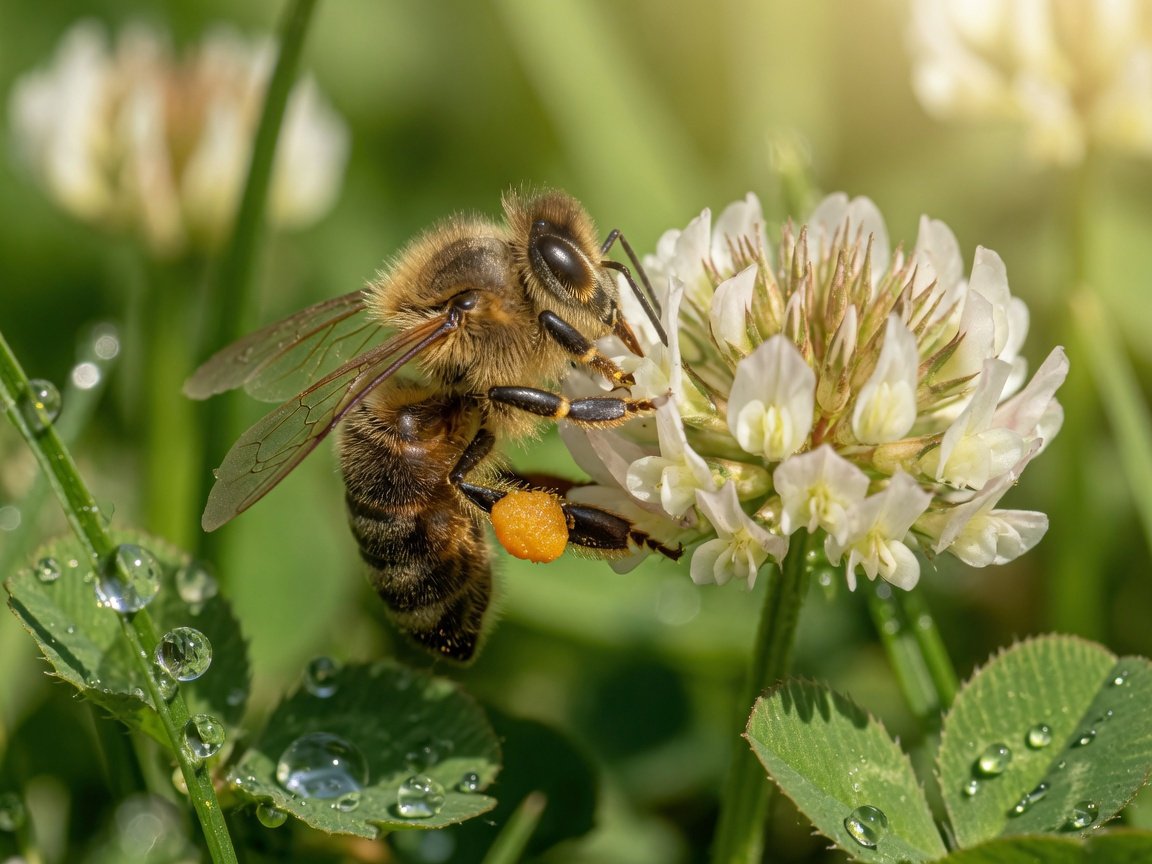
Everything starts outside the hive with the forager bees — older, experienced workers who have moved on from inside duties and taken up the job of bringing food home. They navigate using a combination of scent, colour vision, and information shared by returning foragers through the famous waggle dance. This dance communicates the direction and distance to productive flowers, allowing nestmates to fly straight to rewarding sources rather than searching at random. It’s a remarkably efficient collective intelligence system.
Foragers typically work within 1–3 miles (1.5–5 km) of the hive, though they are fully capable of flying much farther when nearby flowers are scarce. Using their long, flexible tongue (proboscis), they draw nectar from the base of flowers and load it directly into the honey stomach — a purpose-built organ completely separate from the digestive stomach. A fully loaded forager may carry a nectar weight close to her own body weight before heading home.
Bees can fly further when forage is scarce, but most productive foraging happens within this radius. The waggle dance lets foragers share precise directions, reducing wasted flight time and focusing effort on the best-rewarding sources available.
Weather shapes every foraging day. Warm, calm, dry conditions produce the most efficient flights and the richest nectar loads. Cold temperatures (below roughly 10°C), strong winds, and heavy rain reduce flights significantly or stop them altogether. UK beekeepers quickly learn to read the weather in relation to colony behaviour — on a warm June day with a clover crop in flower, a strong colony can bring in nectar at a surprising rate. On a cold, wet July week, the same colony may barely forage at all.
As bees collect nectar, they also pick up pollen on their body hairs and transfer it between flowers. This makes honey bees among the most important pollinators of food crops, orchards, and wild plants. Nectar collection and pollination are inseparable — every foraging trip contributes to both the colony’s honey store and the wider ecosystem.
Step 2 — What Is the Honey Stomach and Why Does It Matter?
The honey stomach — also known as the crop — is a dedicated storage chamber in the bee’s abdomen, completely isolated from her digestive system by a muscular valve. That valve opens only when the bee deliberately regurgitates her load for transfer, meaning the nectar stays sealed and undigested throughout the entire flight. Without this physical separation, every load of nectar would simply be consumed as fuel for the forager and none of it would ever become honey.
But the honey stomach is far more than a sealed container. Glands in its walls continuously secrete enzymes into the nectar during flight. The most critical of these is invertase, which converts sucrose — the dominant sugar in most flower nectars — into the simpler sugars glucose and fructose. This chemical transformation begins while the bee is still airborne, before she even returns to the hive. Raw flower nectar typically contains 20–50% sugars by weight; fully processed ripe honey contains around 80% total sugars.
Colony health affects this process directly. A bee weakened by Varroa infestation, disease, or poor nutrition will produce fewer enzymes and carry lighter loads — meaning more trips for the same volume of nectar, slower processing, and ultimately less honey. This is one of the reasons why effective Varroa management and strong colony health are not just animal welfare issues — they are the foundation of every productive honey season.
Step 3 — How Does Nectar Get Passed Around the Hive?
When a forager returns to the hive, she doesn’t simply drop her load into a cell and fly out again. Instead, she passes the nectar mouth-to-mouth to one or more waiting house bees — a process called trophallaxis. The receiving bee holds the nectar in her own honey stomach for a period, adding further enzymes, before either passing it on again or depositing it in the comb. A single load may travel through the honey stomachs of several different bees before it is finally stored.
This handover process achieves several things at once. It blends nectar collected from many different flowers, evening out the composition and creating a more consistent product. Each transfer adds another round of enzyme activity, accelerating the conversion of sugars. And it allows the colony to make real-time decisions about allocation — some incoming nectar gets diverted to feed brood or flying workers immediately, while the rest is set aside for long-term honey storage.
Colony size matters enormously here. A colony with 50,000 or more bees has abundant house bees at every point in the trophallaxis chain, which means incoming nectar moves quickly through processing and into the comb. A small colony of 10,000 bees working the same nectar flow has far fewer relay points, slower processing, and a smaller workforce available for fanning. This is why building strong colonies before the main flow is one of the highest-leverage actions in practical beekeeping.
Step 4 — How Do Bees Dry Out Nectar to Make Honey?
After trophallaxis, house bees deposit the processed nectar as thin droplets on the walls of open wax cells. At this point it is still a very thin liquid — fresh nectar can contain around 70% water or more, depending on the plant species and local weather conditions. Bees must remove the majority of that moisture before the nectar is stable enough to store safely. They use two complementary methods to achieve this, running simultaneously around the clock.
The first method is passive but highly effective: spreading nectar thinly across the cell walls maximises the surface area exposed to warm hive air, allowing evaporation to proceed quickly. The hexagonal structure of honeycomb packs a very large drying surface into a compact space. The second method is active: worker bees station themselves at the hive entrance and across the frames and fan their wings in coordinated currents — pushing warm, moisture-laden air out of the hive while drawing in drier air from outside.
Bees must evaporate more than half the weight of fresh nectar as water before it becomes shelf-stable honey. Warm, dry conditions and a strong colony with plenty of fanning bees dramatically speed up this process.
Fanning serves a second purpose alongside honey production. The same air currents that dry the nectar also regulate the temperature of the brood nest, helping to keep developing larvae at the stable warmth they require. The two tasks are intertwined — a well-ventilated hive produces better honey and raises healthier brood at the same time. This interconnection is a good illustration of why hive strength and health affect the honey crop so directly.
Step 5 — When and How Do Bees Seal Honey with Wax?
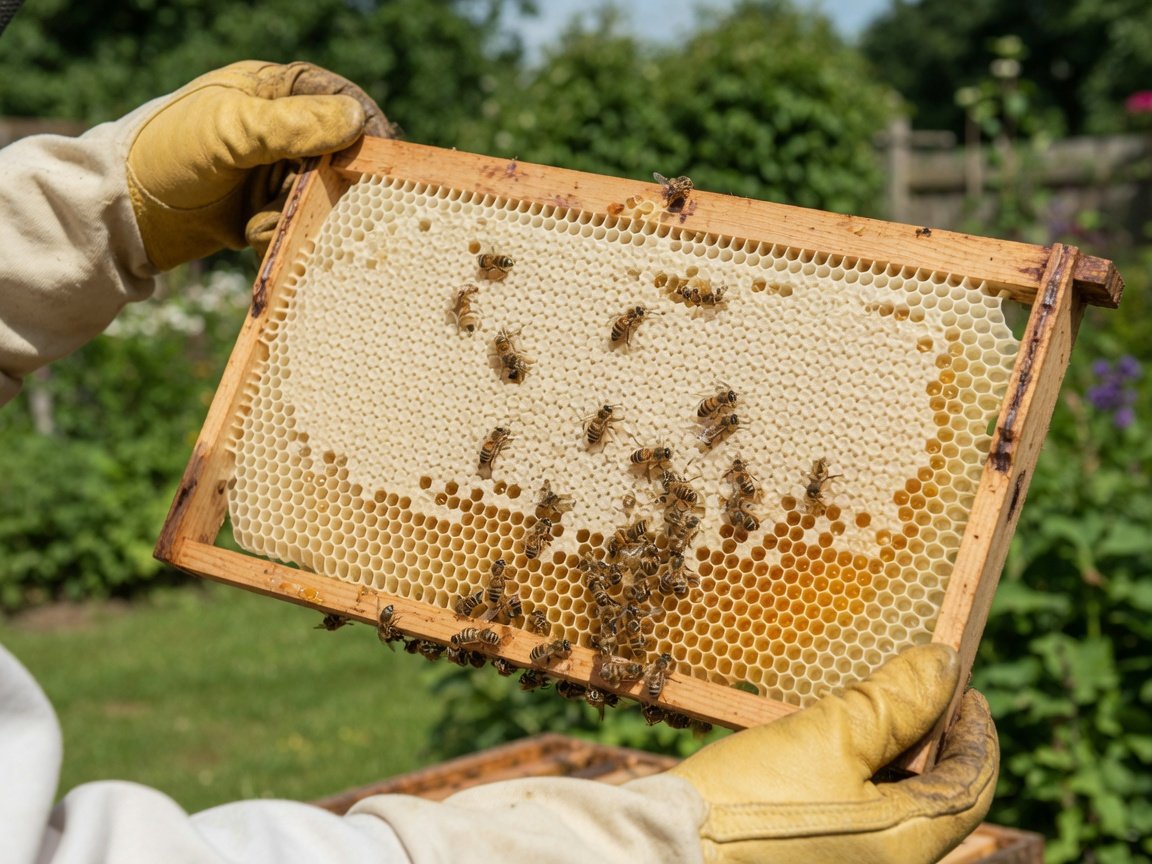
The bees decide when a cell is ready to cap. Once the moisture content has dropped to around 17–18%, house bees seal the cell with a thin, slightly convex layer of freshly secreted beeswax. The resulting pale wax cappings are one of the most important visual signals a beekeeper looks for when assessing whether honey is ripe and ready for harvest. A frame covered in firm, pale caps is a reassuring sight during inspection season.
The cap is not just a lid — it is an active part of the preservation system. Inside the hive, the air is warm and relatively humid. Without a wax seal, even properly dried honey would gradually reabsorb atmospheric moisture and eventually ferment. The cap locks in the moisture content achieved by all that fanning and processing. It is the colony’s own built-in quality checkpoint — a cell only gets sealed when the bees are satisfied the contents are stable enough to store long-term.
Different cells on the same frame often cap at different times — it is perfectly normal to find a mixture of capped cells and thin, unconcentrated nectar side by side on the same frame. A practical threshold for most beekeepers is to wait until around 80% or more of a frame’s cells are capped before extracting. For uncapped cells you want to harvest during a fast nectar flow, a refractometer reading is the most reliable way to confirm they are safe to include.
How Long Does It Take Bees to Make Honey?
There is no fixed number of days. The time it takes bees to convert nectar into capped honey depends on several interacting variables: the starting water content of the nectar (which varies considerably between plant species), the size and health of the colony, air temperature, the humidity inside and outside the hive, and how vigorously bees are able to fan. During a warm, dry UK summer with a strong colony at the peak of an oilseed rape or white clover flow, bees can fill and cap frames surprisingly quickly. In cooler or damper conditions, the same volume of nectar can take substantially longer to ripen.
This variability is why most experienced beekeepers and national beekeeping bodies consistently advise against using a day count to decide when honey is ready to harvest. Different cells ripen at different rates even on the same frame. The most reliable approach combines physical observation — checking capping density and testing the consistency of uncapped honey by tilting the frame — with a refractometer reading where there is any uncertainty.
The practical takeaway: inspect frames regularly during a strong flow, look at capping progress each visit, tilt uncapped frames over the open hive to check whether liquid nectar runs freely, and use a refractometer when in doubt. The bees will show you when honey is ready — your job is to read the signs rather than rely on the calendar.
Why Doesn’t Honey Spoil?
Properly ripened honey is one of the most naturally shelf-stable foods ever recorded. Sealed honey found in ancient Egyptian tombs was apparently still edible after thousands of years — a remarkable fact that reflects just how effectively bees have engineered a hostile environment for spoilage organisms. Several properties work together to achieve this, and none of them requires refrigeration or artificial preservatives.
The most fundamental factor is very low moisture content. At around 17–18% water, ripe honey contains so little free water that most bacteria, yeasts, and moulds simply cannot grow. Add to that honey’s naturally acidic pH of approximately 3.2–4.5 — produced by gluconic acid, a byproduct of enzyme activity during processing — and the highly concentrated sugars that draw water out of any microbial cells by osmosis, and you have a product that is actively inhospitable to almost all common spoilage organisms.
Honey’s acidity comes from gluconic acid, a byproduct of glucose oxidase enzyme activity during nectar processing. Most bacteria and moulds cannot survive in this pH range, making properly ripened honey naturally self-preserving at room temperature.
The enzyme glucose oxidase also generates small amounts of hydrogen peroxide in diluted honey, contributing further antibacterial properties that researchers have documented consistently. Inside the hive, the wax cap provides a physical seal against the humid hive atmosphere — preventing the honey from reabsorbing moisture after the bees have worked so hard to remove it. The cap and the honey’s chemical properties work as a system.
One important distinction: crystallised honey is not spoiled honey. Crystallisation is a natural change in texture caused by the balance of glucose and fructose — it has nothing to do with age or quality. It can be reversed by gentle warming in a water bath kept well below boiling. Fermented honey, by contrast, will smell distinctly alcoholic and is not safe to eat or feed back to bees. The difference between the two is easy to detect by smell alone.
How Much Honey Does One Bee Actually Make?
One of the most striking facts in beekeeping is how little honey a single worker contributes. University of Missouri Extension — one of the most widely cited sources in beekeeping education — puts the figure at roughly one-twelfth of a teaspoon over a worker’s entire lifetime. That means approximately twelve bees must live and work their whole lives to produce a single teaspoon of honey. It reframes every jar on a shelf as a monument to collective effort on an almost unimaginable scale.
Scale that up to a standard 454 g (one pound) jar and the numbers become genuinely staggering. Widely used beekeeping education estimates put the combined flower visits needed at roughly two million per pound, with the colony flying a cumulative distance of approximately 55,000 miles (88,500 km) — more than twice around the circumference of the Earth. These are illustrative estimates rather than exact measurements, but they convey the true scale of the undertaking.
An estimate commonly used in beekeeping education to illustrate the scale of foraging effort. Actual distances depend on the forage available near the hive. Referenced in UC Davis beekeeping educational resources.
A strong UK honey bee colony at peak summer may contain 50,000 or more bees. Working together during a good nectar flow with abundant forage nearby, that population can produce many kilograms of surplus honey — enough for a meaningful harvest while still leaving the colony with adequate winter stores. This is why colony strength is the single most important factor in honey yield, and why beekeepers who focus on building population ahead of the main flow consistently outperform those who don’t.
Do All Bees Make Honey?
Not all bees make honey in the way beekeepers harvest it. The large quantities of storable, harvestable honey that fill supers and jars are produced almost exclusively by honey bees (Apis mellifera in the UK and across most of the Western world). Their large, perennial colonies need substantial food reserves to survive winter and gaps between nectar flows — that evolutionary pressure is what drove the development of large-scale honey production in the first place.
| Bee Type | Produces honey? | Stores it? | Harvestable? |
|---|---|---|---|
| Honey bees (Apis mellifera) | ✅ Yes | Large quantities in wax comb | ✅ Yes — surplus taken by beekeepers |
| Bumblebees | ⚠️ Small amounts | Small wax nectar pots only | ❌ No — annual colony, never enough surplus |
| Solitary bees | ❌ No | Nectar-pollen provision for larvae | ❌ No |
| Stingless bees (tropical species) | ✅ Yes | Small resin or wax pots | ⚠️ Small quantities in some cultures |
Bumblebees do store small amounts of nectar in wax pots inside their nests, but their colonies are annual — only the mated queen survives winter, and there is never anything close to a harvestable surplus. Solitary species such as mason bees, leafcutter bees, and mining bees provision individual nest cells with a nectar-pollen paste for their offspring, but they produce no stored honey at all. In tropical regions, some stingless bee species do produce harvestable honey in small quantities, though it typically differs considerably from Apis mellifera honey in moisture content, acidity, and flavour.
Why Is Honey Different Colours?
Hold two jars of UK honey side by side and you might find one almost water-white and the other deep amber. That difference is almost entirely botanical — the colour, flavour, aroma, and texture of honey reflect which plants the bees were visiting when they collected the nectar. Most UK colonies forage from a mixture of local plants, producing wildflower honey with a blended character that shifts through the season. When a dominant crop fills the local landscape, though, the honey it produces takes on a very specific personality.
| Honey Source | Colour | Notable Characteristic |
|---|---|---|
| Oilseed rape | Very pale, cream-white | Crystallises very quickly into a firm, fine-grained texture |
| Spring blossom | Light gold | Delicate flavour from fruit trees, willow, and dandelion |
| White clover | Golden amber | Mild, well-rounded flavour — one of the most popular UK honeys |
| Lime (linden) | Pale to medium amber | Distinctly aromatic, sometimes with a slightly minty character |
| Heather | Dark reddish-amber | Strong flavour; naturally thixotropic (gel-like) consistency |
| Ivy | Pale off-white | Strong flavour; granulates very quickly; valuable late-season colony stores |
Darker honey is not older, lower quality, or more strongly flavoured by definition — colour is simply a botanical fingerprint, not a measure of freshness or grade. Likewise, very pale honey is not automatically milder or better. A strongly flavoured, deeply coloured heather honey and a delicate pale spring blossom honey are both excellent products — they are just different. Laboratory pollen analysis (melissopalynology) can confirm the main botanical sources in a honey sample where precise origin matters for labelling or market differentiation, though experienced beekeepers often develop a good instinct for their local crop over time.
What the Honey-Making Process Means for Beekeepers in 2026
Understanding how bees make honey is not just satisfying biology — it is directly useful for every practical decision you make during the season. When you understand why nectar needs time and warmth to dry, you see immediately why cold, damp summers produce smaller crops. When you grasp trophallaxis, you understand why disease management affects honey yield. The process covered in this guide is the engine beneath every hive management decision, and at rwgreeff.com it underpins all the seasonal beekeeping guidance we share.
📊 Case Study — A Well-Managed UK Colony in a Strong OSR Year
A healthy, overwintered colony entering a warm, dry May with 50,000 or more workers, positioned within two miles of a substantial oilseed rape crop, can fill two full supers within three to four weeks during peak bloom. At harvest, a colony of this strength in a good year may yield 25–40 kg of surplus honey above adequate winter stores, with refractometer readings consistently at or below 18% moisture. Key variables: colony population before the flow begins, available forage within foraging range, and weather during the critical two-to-three-week bloom window. A colony half that size working identical conditions typically yields 30–40% less — reinforcing why pre-flow build-up is the beekeeper’s highest-leverage action of the year.
In 2026, beekeepers have better monitoring tools than any previous generation. Affordable digital refractometers confirm moisture content in seconds. Hive scales provide real-time data on nectar flow intensity without disturbing the colony. Improved Varroa management protocols mean more beekeepers are entering peak season with genuinely strong, healthy colonies — the single greatest determinant of how much honey gets produced.
Looking ahead over the next 12–24 months, climate variability is increasingly shaping UK nectar flows. Earlier springs, longer warm spells, and more unpredictable summer rainfall are all shifting the timing and intensity of key crops. Beekeepers who keep detailed records year on year — noting when flows start, which crops dominate in their area, how colour and moisture vary by season — are building a local knowledge base that no piece of equipment can replicate.
🛠 Essential Tools for Monitoring Honey Ripeness
- Honey refractometer — measures water content accurately in seconds; target 18% or below before extracting any frame
- Hive scales — track daily weight gain during a nectar flow without opening the hive and disturbing the bees
- Uncapping fork or roller — allows spot-sampling of individual uncapped cells during a routine inspection
- Season notebook or hive records app — logging flow start dates, capping progress, moisture readings, and final yield builds an invaluable multi-year picture of your local forage
- Accurate thermometer — monitoring ambient temperature helps explain sudden changes in foraging activity and fanning behaviour
The National Bee Unit advises beekeepers to combine physical observation — checking capping density and testing uncapped honey consistency — with tool-based measurements rather than relying on any single indicator. This combined approach produces more consistent harvests and significantly reduces the risk of fermented honey in storage.
Frequently Asked Questions — How Bees Make Honey
How long does it take bees to make honey?
There is no fixed number of days. The speed depends on the nectar’s starting water content, colony size and strength, air temperature, humidity, and how much fanning the bees can sustain. During a warm, dry UK summer with a large colony and abundant forage nearby, bees can ripen and cap frames surprisingly quickly. In cooler, damper conditions, the same volume of nectar takes considerably longer. Always judge readiness by capping density and refractometer reading — not by the calendar or by how long the flow has been running.
How do I know when honey is ready to harvest?
Look for frames where around 80% or more of the cells are firmly capped with pale beeswax. As a supplementary check, tilt the uncapped frame gently over the open hive — if liquid nectar runs out freely, it is too wet to harvest. For the most reliable result, use a honey refractometer to confirm moisture content is at or below 18%. This is especially important for uncapped cells or frames harvested during an unusually cool or damp season, when bees may take longer to complete drying.
Why has my honey crystallised — is it still good?
Yes — crystallised honey is completely fine and is not a sign of spoilage. Crystallisation is a natural process driven by the glucose-to-fructose ratio in the honey. Honeys high in glucose, such as oilseed rape honey, crystallise very quickly and firmly; others, like most summer wildflower honeys, may remain liquid for considerably longer. To return crystallised honey to a runny texture, place the sealed jar in a bowl of warm water (well below boiling — keep it under about 40°C to protect the natural enzymes) and stir gently until the crystals dissolve.
Can honey ferment, and how do I prevent it?
Yes, honey can ferment if its water content is too high — either because it was extracted before fully ripening, or because it absorbed moisture from the air after extraction. Fermented honey has a distinctly sour or alcoholic smell and may show a frothy or bubbly surface. To prevent it: only harvest well-capped frames (or verify uncapped frames with a refractometer), store honey in clean airtight containers, and keep storage areas cool and dry. Do not feed fermented honey back to bees — it can cause dysentery and is best composted or disposed of.
How many flowers does it take to make a jar of honey?
University of Missouri Extension estimates that producing approximately one pound (454 g) of honey involves roughly two million flower visits across the colony. The exact number varies with the nectar content of the flowers visited, the distance bees need to travel, and the weather. Rich nectar sources — oilseed rape, white clover, and lime trees among them — allow bees to fill their honey stomachs faster and in fewer visits. Sparse or low-nectar sources require many more trips for the same volume of incoming nectar.
What is the difference between capped and uncapped honey?
Capped honey has been dried to a safe moisture level by the colony and sealed under a wax cap. It is ripe, stable, and ready for storage or harvest. Uncapped honey is still being processed and likely has a higher water content. It is not automatically unsafe to extract, but its moisture should be confirmed with a refractometer before it is included in a harvest. Any uncapped honey reading above 20% water carries a meaningful risk of fermenting in the jar once it is extracted and bottled away from the active hive environment.
Do bees make honey all year round in the UK?
No. UK honey production is largely confined to the active foraging season — broadly April through to August, with variations by region, altitude, and annual weather patterns. During winter, bees cluster together and live almost entirely on their stored honey, using the energy to generate the heat needed to keep the cluster alive through cold weather. This is why ensuring adequate winter stores — a commonly used UK guide suggests approximately 15–25 kg of capped honey per full colony — is one of the most important responsibilities a beekeeper carries at the end of every season.
Put This Knowledge to Work in Your Own Apiary
Every jar of honey starts with a forager visiting a flower and ends with a beekeeper lifting a perfectly capped frame. In between, tens of thousands of bees contribute their fraction of a teaspoon to what is genuinely one of the most sophisticated food-preservation systems in the natural world. Understanding that process — not just as biology, but as the engine driving every hive management decision — is what separates beekeepers who produce consistent crops from those who feel at the mercy of the weather and the bees.
Here is a practical seasonal roadmap to put everything covered in this guide into action in your own apiary:
- Spring (March–April): focus entirely on colony build-up. A large, well-fed colony entering the first nectar flow produces far more honey than a smaller one catching up throughout the season. Feed if needed to stimulate brood-rearing before natural forage arrives.
- Early summer (May–June): add supers before they are needed — not after bees run out of space. Overcrowded supers slow nectar processing and increase swarming pressure. Give the bees room to work efficiently.
- Peak flow (June–July): inspect weekly, watch capping progress on each frame, and use a refractometer on any frame you intend to extract. Harvest only clear surplus — leave the colony with more than enough to cover any forage gap before winter stores are assessed.
- Late summer (August): assess winter stores honestly. Aim for 15–25 kg of capped honey per full colony heading into autumn, and feed any colony falling short with an appropriate syrup — never with supermarket honey, which can introduce serious disease.
- Autumn (September–October): complete Varroa treatment, close hives down for winter, and record this season’s data — flow start dates, peak yield weeks, moisture readings, honey colour, and final yields. This record shapes every decision you make next year.
The bees have been refining this process for millions of years. Your job as a beekeeper is to understand it well enough to work with them — to provide the colony with the space, health, and forage access to do what they do best, and to harvest only what they can genuinely spare. Get that balance right, and the honey takes care of itself.