A beekeeper is also known as an apiarist — that’s the most common professional title worldwide. Other widely recognized names include apiculturist, honey farmer, and apiary manager. The right label depends on your scale of operation, your primary focus, and who you’re talking to.
Some of the links in this article may be affiliate links. If you make a purchase through these links, we may earn a small commission at no extra cost to you. Thank you.
Key Takeaways
- Apiarist is the most widely recognized professional alternative to “beekeeper” in both the UK and the US.
- Apiculturist emphasizes the science and study of bee management — it’s the preferred title in academic, research, and formal industry contexts.
- Commercial operators use titles like commercial apiarist, apiary operator, honey farmer, and migratory beekeeper depending on their business model.
- Specialist roles — including queen breeder, pollination service provider, and apiary manager — reflect specific functions within larger operations and carry their own distinct vocabulary.
What Does the Word “Beekeeper” Really Mean?
The word beekeeper is the everyday, plain-English name for anyone who manages a colony of bees. It’s clear, direct, and immediately understood by almost everyone. But inside the beekeeping world itself, that single word barely scratches the surface of who’s doing what.
Beekeeping as a formal practice stretches back thousands of years. Ancient Egyptian murals from around 2400 BC depict people managing hives and harvesting honey with a level of technique that suggests a well-established tradition even then. From the beginning, the role meant different things to different people — food producer, pollination contractor, scientist, community steward, hobbyist all at once. That diversity is exactly why so many professional labels evolved alongside the craft.
The formal scientific term for the practice is apiculture, derived from the Latin word apis, meaning bee. Once you understand that root, the rest of the professional vocabulary clicks into place. An apiary is the place where bees are kept. An apiarist is the person who tends it. An apiculturist is someone who practices apiculture — often with a broader scientific or educational emphasis. Each title carries its own professional flavor, and knowing the differences helps you speak the language of the industry with genuine confidence.
If you’re just getting started, vocabulary is one of the first things that can feel a little overwhelming. Getting a solid grounding in the essentials of beekeeping — including how the professional terminology works — sets you up to learn faster, join local clubs more comfortably, and earn the respect of more experienced keepers from day one.
What Is an Apiarist? The Most Common Professional Title
Apiarist is the most widely used professional alternative to the word “beekeeper.” It’s especially common in British English, where you’ll find it on business cards, agricultural registrations, and honey labels at farmers’ markets. In the United States, it’s also the preferred term in official, regulatory, and licensing contexts.
An apiarist manages an apiary — that’s their defining function. The title implies active, hands-on management of bee colonies. Crucially, it doesn’t specify scale. A person with two hives in their back garden is just as legitimately an apiarist as someone running 2,000 colonies across multiple sites. The word describes the relationship with the apiary, not the size of it.
The American Beekeeping Federation uses both apiarist and beekeeper in its official materials, treating them as functionally equivalent at a professional level. That’s an important signal — the industry itself doesn’t draw a hard line between the two terms. Apiarist simply tends to carry a slightly more formal register, which makes it the better choice on paperwork, in job titles, and in professional correspondence.
Think of it like the difference between calling someone a “cook” and a “chef.” Both prepare food, and both are entirely legitimate titles — one just signals a different level of formality depending on the context. Apiarist sits at the chef end of that spectrum when you need to sound professional without sounding stuffy.
What Does Apiculturist Mean in the Beekeeping World?
If apiarist is about managing bees in practice, apiculturist is about understanding the full science and scope of beekeeping. The title places emphasis on the study, research, and broader practice of apiculture rather than just the day-to-day management of individual hives.
You’re most likely to encounter apiculturist in academic journals, university extension programs, industry research publications, and formal government reports. A researcher studying varroa mite resistance in honeybee populations would call themselves an apiculturist. A government inspector advising farmers on colony health would too. So would a professor teaching bee biology at an agricultural college.
That said, the line between apiarist and apiculturist isn’t rigid. Many experienced commercial beekeepers use both titles depending on their audience. Talking to a fellow keeper at a club meeting? “Beekeeper” or “apiarist” lands perfectly fine. Writing a grant application or presenting at a conference? “Apiculturist” signals the right depth of knowledge.
The global apiculture sector is larger than most people realize. Industry analysts estimate the worldwide beekeeping market at close to $10 billion when you include honey production, pollination services, equipment manufacturing, and adjacent industries. The practitioners who operate across that full landscape — especially those doing research, advising on policy, or developing new techniques — are the ones most likely to carry the apiculturist title.
Is “Honey Farmer” a Real Professional Title?
Yes — and it’s a perfectly legitimate one. Honey farmer is the plain-spoken, no-frills title that puts the product front and centre. It tells people exactly what you do: you farm honey. No Latin required, no explanation needed.
Honey farmer tends to be used by people who operate at medium to large scale and who sell honey as their primary output and income source. It’s commercial without being overly technical. Farmers’ market vendors, direct-to-consumer producers, and rural family-run operations often prefer it because it resonates with customers immediately and honestly.
The National Honey Board reports that the United States produces well over 100 million pounds of honey in a strong production year. The apiarists behind that output — managing large apiaries and selling commercially — are exactly the kind of operators who carry the honey farmer label with pride. It reflects what they produce and who they sell to.
It’s also worth noting that honey farmer isn’t a uniquely English construct. In French, apiculteur; in German, Imker; in Spanish, apicultor — all of these map to the same practical reality: a person who cultivates bee colonies to produce honey and other hive products. The title is ancient, practical, and respected across beekeeping cultures worldwide.
What Commercial and Business Titles Do Beekeepers Use?
Once beekeeping scales into a business, the vocabulary shifts to reflect specific roles, responsibilities, and revenue streams. Here’s a clear breakdown of the most common commercial titles and what they typically mean in practice:
| Title | Typical Scale | Primary Focus |
|---|---|---|
| Hobbyist Beekeeper | 1–10 hives | Learning, personal enjoyment, garden pollination |
| Sideline Beekeeper | 11–300 hives | Supplementary income alongside another job |
| Commercial Apiarist | 300+ hives | Full-time honey production and/or pollination |
| Apiary Operator | Variable | Business management, staff, multi-site oversight |
| Honey Farmer | Medium to large | Honey production, direct sales, market supply |
| Migratory Beekeeper | Large-scale | Pollination services, seasonal hive transport |
| Queen Breeder | Specialist | Queen production, genetics, colony improvement |
The distinction between sideline and commercial is particularly significant. The USDA uses these categories in its annual honey production surveys to segment the US apiculture industry. Sideline beekeepers generate real income from their hives but it isn’t their primary livelihood. Commercial apiarists — typically defined as those managing 300 or more colonies — operate beekeeping as a full business enterprise with all the financial, legal, and operational complexity that implies.
Apiary operator is the most business-neutral title on the list. It says: I run an apiary. It doesn’t specify product focus, scale category, or scientific emphasis — just operations. This makes it particularly useful on business registrations, insurance documents, and government paperwork where precision matters more than personality.
What Specialist Roles Exist Within a Beekeeping Operation?
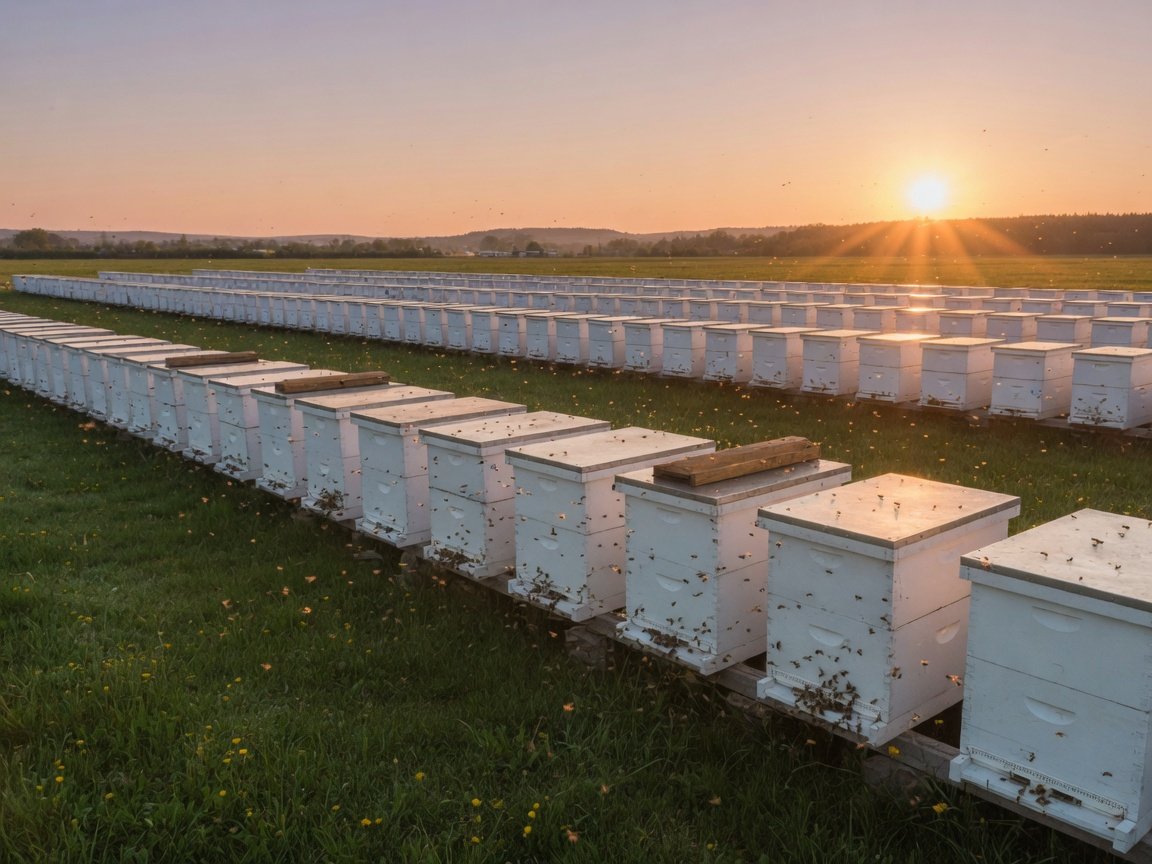
Large-scale beekeeping operations don’t run on a single generalist doing everything. Like any complex agricultural business, they’re staffed by specialists who each own a defined part of the operation. Understanding these roles helps whether you’re hiring, applying for a position, or simply mapping out how a professional apiary works.
- Apiary Manager — Oversees day-to-day hive operations across multiple sites. Monitors colony health, manages nutrition and pest control programs, leads inspection schedules, and often supervises other hive workers. This role demands deep practical experience and strong organizational skills.
- Queen Breeder / Queen Producer — A highly technical role focused on producing genetically superior queens at scale. Queen breeders use tools like Jenter kits and grafting techniques to rear queens consistently. Their work shapes colony genetics, temperament, productivity, and disease resistance across an entire operation.
- Pollination Specialist / Pollination Coordinator — Manages the complex logistics of moving hives to pollination sites on schedule. Responsibilities include negotiating contracts with farmers, scheduling hive deliveries and removals, and monitoring colony strength to meet contracted requirements. California’s almond crop alone requires more than 1.5 million honeybee colonies each February — coordination at that scale is serious professional work.
- Wax and Product Processor — Handles extraction, filtering, grading, and packaging of honey, beeswax, propolis, and royal jelly. In larger operations this is a standalone role with its own equipment, quality control protocols, and food safety compliance obligations.
- Hive Inspector — Often a government-employed or industry-certified role focused on monitoring hive health, identifying disease, and enforcing biosecurity standards across a region. Hive inspectors work closely with beekeepers but operate independently on behalf of regulatory bodies.
These roles reflect how significantly beekeeping has professionalized over recent decades. It’s no longer just one person with a smoker and a hive tool — it’s a coordinated industry with job descriptions, certifications, career development pathways, and significant economic output behind it.
What Labels Do Hobbyist and Small-Scale Beekeepers Use?
Not every beekeeper is running a commercial operation — and that’s entirely fine. Industry surveys consistently show that the majority of beekeepers in the US and UK manage fewer than 25 hives. Many keep just one or two. These are the hobbyist and sideline keepers, and they have their own vocabulary that reflects both their scale and their motivations.
Hobbyist beekeeper is the most common self-description among people who keep bees for love of the craft rather than primary income. Hobby beekeepers often maintain hives for garden pollination, local honey production, and the deep satisfaction of working with one of nature’s most extraordinary insects. Even a single well-managed hive can make a meaningful difference to local plant diversity and garden productivity.
Sideline beekeeper sits between hobbyist and commercial. You’re managing enough hives to generate meaningful supplementary income — typically 50 to 200 colonies — but beekeeping isn’t your full-time occupation. Many sideline keepers hold regular jobs and manage their apiaries on evenings and weekends. It’s a serious commitment, done part-time.
Backyard beekeeper and urban beekeeper are informal titles that have grown significantly in recent years, particularly as city-based beekeeping movements have expanded across the UK, US, and Australia. These labels speak to location and community motivation as much as scale. Urban beekeepers are often driven by environmental concerns, local food production, and ecological stewardship rather than commercial output.
One thing all small-scale beekeepers share, regardless of their label, is the learning curve — including the physical realities of working with bees. Understanding how to handle stings properly and protect yourself effectively is essential knowledge from day one. The practical guide to beekeeping stings — prevention, treatment, and what every keeper should know is one of the most useful resources any beginner can bookmark early.
What Are Pollination Service Provider Titles?
Some beekeepers don’t make honey as their primary business at all. Their core service is renting hives to farmers who need pollination during crop-flowering seasons. These professionals work under a distinct set of titles that reflect their critical role in the global food supply chain.
- Pollination Service Provider — The formal professional title for a beekeeper who contracts with farmers to deliver and manage hives during pollination seasons. Fees are charged per colony, and contracts specify minimum colony strength, placement timing, and removal schedules.
- Migratory Beekeeper — Describes practitioners who transport hives long distances to meet seasonal pollination demands across different agricultural regions. A single migratory beekeeper might move colonies from Florida to Maine to California across one year, following the agricultural bloom calendar.
- Colony Manager — A more operationally focused title emphasizing ongoing maintenance of colony health throughout a pollination contract season. Colony managers ensure hives consistently meet the strength specifications written into contracts.
- Apiary Contractor — The formal business and legal title used when a beekeeper enters into commercial contracts for pollination services. Most relevant in written agreements, insurance documentation, and tax filings.
Pollination beekeepers are genuinely essential to global food security. Scientific research consistently estimates that bees pollinate approximately one-third of the food that humans eat worldwide — including almonds, apples, blueberries, cucumbers, melons, and hundreds of other crops. The professionals who provide pollination services carry titles that reflect genuine commercial responsibility, not just agricultural enthusiasm.
Who Are Queen Breeders and Apiary Entrepreneurs?
Queen breeders occupy one of the most technically demanding roles in the entire apiculture industry. Their job is to produce genetically superior queens — individuals whose colonies will be more productive, more disease-resistant, and more behaviorally stable. It’s where beekeeping meets applied genetics, and it requires both scientific knowledge and genuine artisan skill.
A working queen breeder typically uses one or more of these production methods:
- Grafting — Transferring young larvae into queen cups by hand. Requires excellent close vision and a very steady touch. It’s the traditional method, still widely used by experienced breeders.
- Jenter or Nicot kit rearing — Plastic cell systems that allow the queen to lay directly into prepared cups, eliminating the need for manual grafting and making the process more scalable for higher-volume production.
- Walk-away splits — Dividing strong colonies and allowing workers to raise emergency queens from existing brood. The simplest method, but gives the breeder less control over genetics.
- Instrumental insemination — Used by advanced breeders and researchers to control mating with precision. Typically reserved for premium genetics programs and scientific breeding work rather than standard commercial queen production.
The demand for quality queens is constant. Every beekeeper who loses a queen through swarming, supersedure, or disease needs a replacement quickly. Queen breeders supply that demand at scale, often producing hundreds or thousands of queens per season to serve local and national markets alike.
Apiary entrepreneurs take a broader view still. These are business builders who have developed diversified revenue streams around their beekeeping operations — selling honey, beeswax candles, propolis products, nucleus colonies, packaged bees, royal jelly, and pollination contracts all from the same enterprise. They carry titles that reflect that business sophistication: apiary owner, apiculture business operator, or simply commercial apiarist with a diversified product range.
The vocabulary around these roles extends well beyond formal titles into a rich vein of community slang and informal terms. If you’re curious how beekeepers actually talk to each other day-to-day, what the beekeeping slang urban dictionary has catalogued is a fascinating look at how a specialist community builds its own linguistic identity.
How Do You Choose the Right Title for Your Role?
Knowing which title to use — for yourself, in a job application, or when describing someone else’s work — comes down to a handful of practical considerations. Here’s a simple decision framework that works in most situations:
- Consider your audience first. Talking to customers at a market? “Beekeeper” or “honey farmer” lands faster and clearer. Writing a grant application or industry submission? “Apiculturist” signals the right depth of expertise.
- Reflect your actual scale. Managing 500+ colonies full-time makes “commercial apiarist” or “apiary operator” accurate. Keeping two hives for garden pollination makes “hobbyist beekeeper” perfectly correct — and there’s nothing diminishing about it.
- Match the function, not just the size. If your primary work is queen rearing, “queen breeder” is the most precise title. If you move hives for crop pollination, “migratory beekeeper” is most accurate. Let the title describe what you actually do.
- Follow local convention. In the UK, apiarist tends to dominate professional settings. In the US, beekeeper is the everyday default. In academic contexts globally, apiculturist is preferred. Match local convention and your title communicates clearly.
- Don’t overthink it. The beekeeping community is warm, welcoming, and famously non-hierarchical. These titles exist to create clarity — not to gatekeep access to a community that’s genuinely happy to have you in it.
Whichever label you land on, what matters most is the practice behind it — the careful, attentive, knowledge-driven work of keeping bee colonies healthy, productive, and thriving. Titles describe the work. The work is what makes you a beekeeper in every sense that counts.
Frequently Asked Questions
What is the professional term for a beekeeper?
The most widely recognized professional term is apiarist. It’s used across official, business, and regulatory contexts in both the UK and US. Apiculturist is also widely accepted, particularly in academic and scientific settings. The terms are functionally equivalent in most situations — apiarist tends to be more common in practical industry use, while apiculturist carries a more research-oriented connotation.
What is another name for a beekeeper?
The most common alternatives are apiarist, apiculturist, honey farmer, apiary manager, and apiary operator. At the specialist end you’ll also encounter queen breeder, migratory beekeeper, pollination service provider, and colony manager. The right name depends on scale, function, and the audience you’re addressing.
What is the proper scientific term for beekeeping?
The proper scientific term is apiculture, derived from the Latin word apis meaning bee. Apiculture covers the full spectrum of bee management — hive construction, colony health, honey extraction, queen rearing, and pollination services. A person who studies or practices apiculture professionally is called an apiculturist.
What is a commercial beekeeper called?
A commercial beekeeper is typically called a commercial apiarist or apiary operator. The USDA generally classifies commercial-scale operations as those managing 300 or more colonies. Beekeepers who focus specifically on moving hives for crop pollination are called migratory beekeepers or pollination service providers.
What do you call someone who breeds queen bees?
Someone who specializes in producing queen bees is called a queen breeder or queen producer. This is one of the most technically specialized roles in beekeeping, requiring expertise in genetics, larval development, and precision rearing techniques including grafting and Jenter kit production.
Is there a difference between an apiarist and an apiculturist?
Yes, though the distinction is subtle rather than strict. An apiarist specifically manages an apiary — the emphasis is on hands-on, practical colony care. An apiculturist practices apiculture more broadly, often with an academic or research emphasis. In everyday usage, many experienced beekeepers use both terms interchangeably. The distinction matters most in formal professional, academic, and regulatory contexts.
What do urban or backyard beekeepers call themselves?
Urban and backyard beekeepers most commonly use the terms hobbyist beekeeper, urban beekeeper, or backyard beekeeper. These are informal but accepted titles that reflect scale (typically fewer than 10 hives) and setting (city or suburban locations). Those who follow low-intervention management approaches sometimes use natural beekeeper to describe their philosophy.
Wrapping It Up: The Title That Fits You Best
Whether you call yourself an apiarist, an apiculturist, a honey farmer, or simply a beekeeper, you’re describing a relationship with one of the most remarkable insects on the planet. The professional vocabulary around that relationship is richer than most newcomers expect — and understanding it opens genuine doors into professional networks, industry resources, and a deeper appreciation of the craft.
Here’s your quick reference for the key titles:
- Use beekeeper in everyday conversation and with general audiences.
- Use apiarist on professional documents, business registrations, and in industry settings.
- Use apiculturist in academic papers, grant applications, and scientific or research contexts.
- Use honey farmer when your primary output is honey and your audience is consumers or retail buyers.
- Use queen breeder, migratory beekeeper, or apiary manager when your role is a specific specialist function rather than general colony management.
Ready to go further? The full guide to beekeeping slang terms every keeper should know is the perfect companion to the professional vocabulary you’ve just learned — it covers the informal, community-built language that sits alongside the formal titles in any real conversation about bees.
—