Feeding bees for winter in the UK means assessing stores after honey removal in late August or September, feeding heavy syrup while bees can still process it, and switching to fondant for cold-weather top-ups when liquid feed is no longer practical. Not every colony needs supplementary feeding — base every decision on actual hive weight and stores, not the calendar alone.
Some of the links in this article may be affiliate links. If you make a purchase through these links, we may earn a small commission at no extra cost to you. Thank you.
Key Takeaways: Winter Bee Feeding in the UK 2026
- Start early: Begin assessing stores as soon as honey supers come off — usually from late August into September — while temperatures are still warm enough for bees to take down and process heavy syrup.
- Store target: Many UK beekeepers aim for roughly 20–25 kg of winter stores in a full-sized National or Langstroth colony, adjusted for hive type, colony strength and local conditions.
- Right feed at the right time: Heavy syrup (2 parts sugar to 1 part water by weight) builds stores in autumn; fondant provides accessible emergency food in cold weather when syrup is no longer practical.
- Never assume late forage has done the job: Ivy and other autumn sources vary enormously year to year. Always check hive weight directly rather than relying on what may or may not be in flower nearby.
Why Does Winter Feeding Matter So Much for UK Beekeepers?
Honey bees in the UK don’t hibernate. Instead, they form a winter cluster — a tightly packed ball that generates warmth by vibrating flight muscles. As temperatures drop, the cluster contracts around the queen and moves slowly through food stores. If it runs out of accessible food during a prolonged cold spell, starvation can happen with alarming speed.
The British Beekeepers Association (BBKA) surveys of UK beekeepers have consistently recorded winter colony losses ranging from around 10% in moderate years to over 20% following harsh winters. Inadequate stores, alongside varroa-related problems, are among the most frequently cited factors. The encouraging news is that starvation losses are largely preventable — catching a light colony in autumn and acting on it makes a genuine difference to survival rates across the season.
The UK has an estimated 44,000 registered beekeepers managing approximately 270,000 honey bee colonies, according to figures published by the BBKA. That enormous variation in apiary location, hive design and local climate means there is no single feeding prescription that works everywhere. The principles, however, are universal: assess early, feed appropriately, and monitor through the winter rather than hoping for the best.
“Colonies should be assessed individually rather than fed automatically. Some hives may still contain excellent stores after summer forage, while others may feel dangerously light once the honey crop has been removed.”
— Colin Chorley, beekeeping writer and beekeeper, Beezknees.co.uk, 2026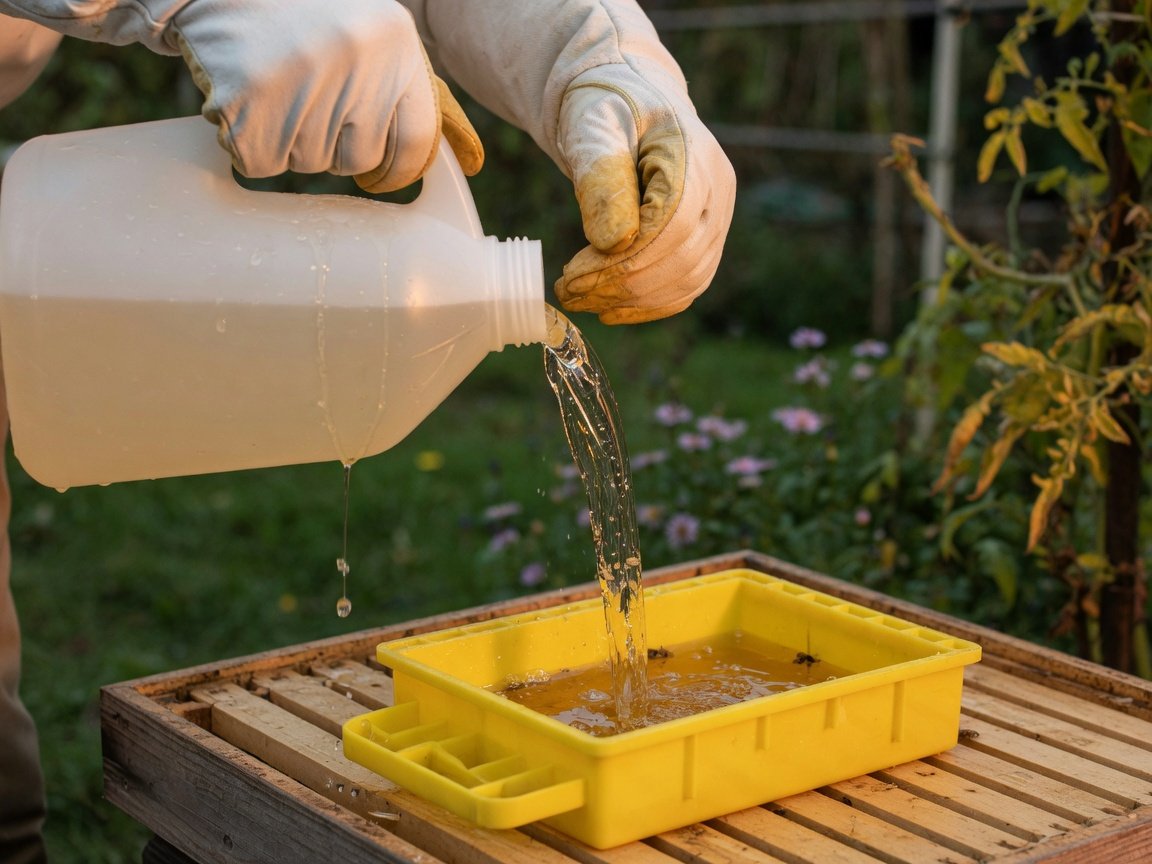
When Should You Start Feeding Bees for Winter in the UK?
The right moment to start autumn feeding is shortly after honey supers come off — and while temperatures are still warm enough for bees to process liquid syrup effectively. For most UK beekeepers, that window runs from late August through September. In northern England and Scotland, where the season closes earlier, acting promptly in August makes sense. In warmer, more sheltered parts of southern England, September is usually fine.
The biological reason for this timing is straightforward. Bees process syrup by evaporating excess moisture from it and capping it for storage. To do this efficiently, they need warmth. Once ambient temperatures regularly fall below around 10°C, the colony’s ability to handle large volumes of liquid feed diminishes significantly. Syrup fed too late may sit wet and unprocessed inside the hive, contributing to moisture problems and potentially fermented stores that are less suitable as winter food.
Autumn feeding should also be coordinated with your varroa treatment schedule. Many of the most effective autumn varroa treatments are applied after honey is removed and before the colony begins building its population of winter bees in earnest. A colony heading into winter with an uncontrolled varroa load will struggle regardless of how well it is fed — the two tasks need to work together, not compete.
Is October Too Late to Feed Bees for Winter?
Not necessarily — but it is always working against the clock. In a mild October with daytime temperatures holding above 10°C, a colony may still take and process modest amounts of heavy syrup. The problem is unpredictability. Cold nights reduce activity sharply, and a colony given a large volume of syrup in October may simply not have the warmth or the energy to process it before conditions deteriorate further.
If a colony is running dangerously short of food in October and syrup no longer feels practical, fondant becomes the right choice. Placed correctly — directly above the winter cluster so bees don’t have to travel in the cold to reach it — fondant can prevent starvation without asking bees to do metabolic work they’re no longer equipped to do efficiently in low temperatures.
The BBKA’s guidance is consistent on this point: feeding by date alone is a mistake. A mild October can still be productive for topping up stores; a cold early October may make even modest syrup feeding unwise. Assess each colony’s actual condition and the forecast for the coming days rather than following a fixed calendar rule.
Autumn-to-Winter Feeding Timeline for UK Beekeepers
Use this as a seasonal framework rather than a rigid schedule. Conditions in your apiary, your local climate and the state of individual colonies will always take precedence over any fixed timetable.
| Period | Primary concern | What to do |
|---|---|---|
| August–September | Building adequate winter stores | Assess stores after honey removal. Offer heavy syrup (2:1) to colonies that need it while temperatures allow. Coordinate with varroa treatment — follow authorised product instructions. |
| October | Finalising autumn preparations | Check stores and hive weight. Use syrup only in mild conditions. Consider fondant for any colony running short when temperatures make syrup impractical. Reduce entrances. Clear wet supers from the apiary. |
| November–January | Cold-weather monitoring | Heft hives with minimal disturbance. Place fondant directly above the cluster if any hive feels noticeably light. Avoid opening unnecessarily in cold weather. Keep records of which colonies have been fed and when. |
| February–March | Late-winter hunger gap | Watch for rapid weight loss as brood rearing accelerates sharply. Respond quickly to any hive running short. Even colonies that seemed fine in January can be at risk by March. Have fondant available and ready to use. |
How Much Winter Store Does a UK Bee Colony Actually Need?
The honest answer is that it depends on a range of factors: colony size, hive type, local climate, apiary exposure and the length of the forage gap in your area. A large thriving colony in a National hive in lowland England will have different needs from a smaller colony in a WBC hive on a Yorkshire hillside. There is no universal number that works for everyone.
That said, a widely used planning figure among experienced UK beekeepers working with full-sized National colonies is roughly 20–25 kg of winter stores. This isn’t a hard rule — it’s a starting point that takes account of the reality of long UK winters and the significant surge in food consumption that comes when brood rearing ramps up again from February onwards. A colony that reaches January with 15 kg of stores can still starve before spring if it burns through reserves faster than expected during a prolonged cold spell or an early build-up.
Two important caveats are easy to overlook. First, total hive weight is not the same as stored food. Boxes, frames, bees and hive furniture all contribute to the number on a luggage scale. Second, stores present in the hive are only useful if the cluster can actually reach them. A tight winter cluster will not travel far across cold, empty comb — food on the opposite side of the brood box from the cluster may be effectively inaccessible during a sustained cold spell.
Local beekeeping associations are an invaluable resource here. Experienced members in your area will have a practical, tested sense of what a safely provisioned hive looks and feels like in your specific conditions — knowledge that no general guide can fully replace. If you’re uncertain whether a colony is adequately stocked, asking a local mentor is always a worthwhile step.
Heavy Syrup vs Fondant: Which Should You Use for Winter Feeding?
The choice between syrup and fondant isn’t really a debate — they’re tools for different jobs at different times of year. Understanding when each is appropriate is one of the most practically useful things a beekeeper can learn.
Heavy Syrup (2:1 ratio)
Heavy syrup — made at 2 parts white granulated sugar to 1 part water by weight — is the standard autumn feeding option for building winter stores. The higher sugar concentration means there’s comparatively less moisture for bees to evaporate before they can cap it for storage. Colonies given heavy syrup while temperatures are still warm can build reserves efficiently and store them in a form that keeps well over winter.
Use a hive-top feeder or contact feeder placed over the crown board. Fill feeders in the evening when flying activity has slowed to reduce the risk of triggering robbing behaviour from neighbouring colonies. Check and refill every two to three days in the early season — colonies often take syrup down faster than you expect when temperatures are warm and the need is real.
Fondant
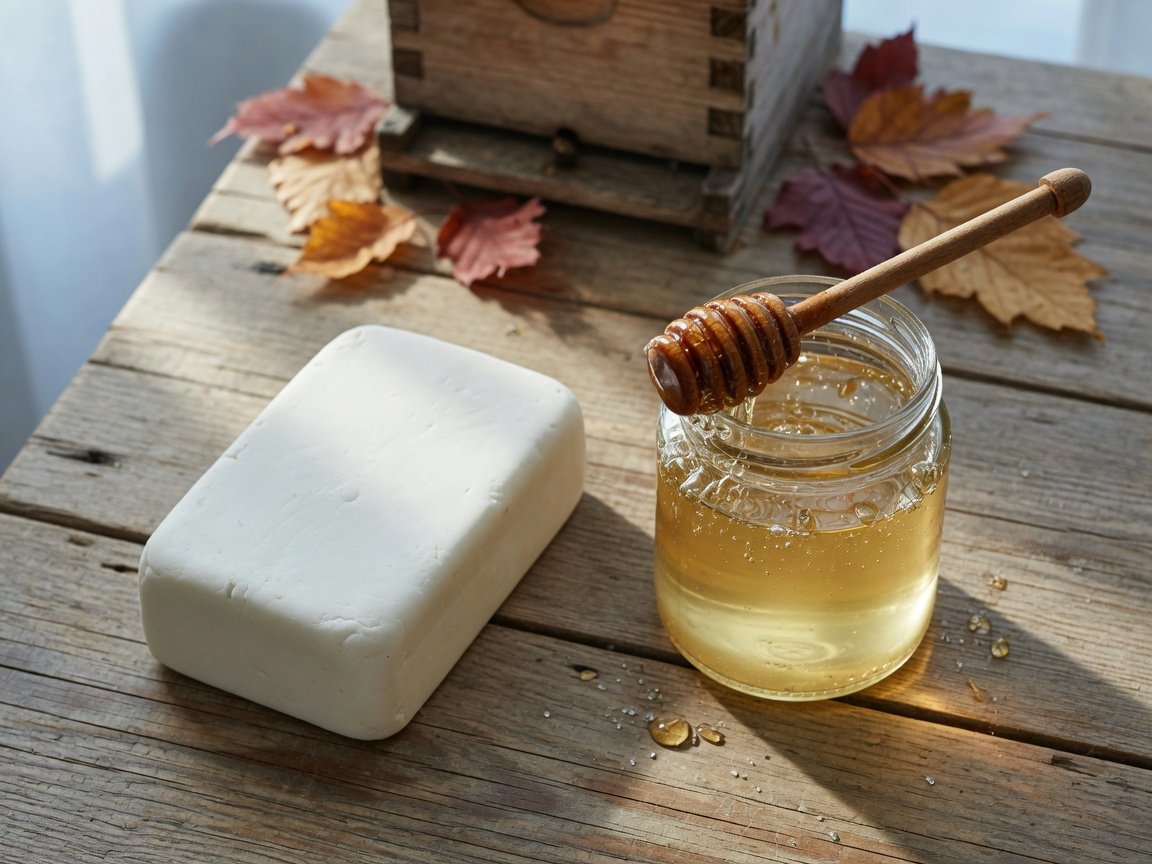
Fondant is a semi-solid sugar paste with a sugar content of around 75–80%. It is used when temperature makes liquid syrup impractical or risky. In cold conditions, bees cannot efficiently evaporate moisture from liquid feed, and consuming large quantities of wet syrup can cause dysentery in a clustered colony. Fondant bypasses this risk because it requires very little processing — bees simply take small amounts of the paste directly.
Place fondant directly above the cluster — either over the crown board hole or on the top bars of the uppermost brood box, positioned so bees don’t have to descend into cold air to reach it. Commercial baker’s fondant (unflavoured, uncoloured) is widely used and available in bulk from beekeeping suppliers. Purpose-made candy boards and products such as Apifonda or Ambrosia fondant patties offer convenient alternatives. The National Bee Unit (NBU) recommends ensuring any supplementary feed used does not introduce disease risk — purchase from reputable suppliers and avoid using honey from unknown sources.
“Heavy syrup is normally the main autumn feeding option because bees can take it down, process it and store it before winter settles in. Fondant is usually more suitable later in the season when temperatures are colder and bees cannot safely process large amounts of liquid feed.”
— BBKA guidance consensus, reflected in advice from multiple UK beekeeping associations, 2026How Do You Check Hive Weight Without Specialist Scales?
Hefting — gently lifting one side of the hive to feel its weight — is the oldest practical method UK beekeepers use to judge winter readiness. It doesn’t give you an exact number, but it gives you something arguably more valuable: a consistent, repeatable impression that improves with practice. The more hives you heft over more seasons, the better your instinct becomes for what well-stocked versus dangerously light actually feels like.
To heft consistently, stand behind the hive, grip the floor or bottom box with both hands, and gently raise the back edge a few centimetres. You’re not trying to weigh it — you’re getting a feel. Compare it with the other hives in your apiary. A hive that feels substantially lighter than its neighbours deserves close attention. Lift from the same point each time and note your impression so you can compare it against your previous visit.
For more precision, a luggage scale with a strap looped under the floor can give you a consistent reading over time. The caveat is important: raw numbers cannot be compared meaningfully between different hive designs or configurations. What you’re tracking is change within the same hive across successive checks. A sustained weight loss of several kilograms across two or three weekly visits in January or February is a reliable early warning sign — and one worth acting on promptly rather than waiting to see what happens next week.
How Do You Prevent Robbing When Feeding Bees in Autumn?
Robbing — where scout bees from one colony locate and raid another colony’s food supply — becomes a serious risk from late summer onwards as natural forage declines and colonies become increasingly defensive over their stores. Once robbing takes hold, it can escalate rapidly and is particularly destructive for smaller or weaker colonies that lack the numbers to mount an effective defence.
The single most effective precaution is timing your feeding. Fill feeders in the evening, after flying activity has naturally slowed. This gives robbers less opportunity to detect the syrup and recruit colony mates to the food source before it is inside the hive and inaccessible. By morning, most of the liquid should be safely stored, and the feeding event has effectively ended before the day’s foraging begins.
Entrance reducers are an important companion measure, especially for weaker colonies. A narrowed entrance is far easier for a small guard force to defend against intrusion. Make sure feeders fit snugly with no drips or gaps — even a small amount of syrup on the outside of the hive can be enough to attract robbing scouts. Remove wet supers from the apiary rather than leaving them stacked nearby, and never leave open syrup containers or exposed comb anywhere in or around the apiary during feeding season.
If robbing does start despite your precautions, act quickly. Close or significantly reduce the entrance of the hive being robbed. In severe cases, you may need to temporarily move the hive to a different location. Prevention is far easier than cure: calm, disciplined feeding habits and a tidy apiary go most of the way towards keeping robbing from starting in the first place.
What Should You Do With Weak Colonies Before Winter?
A weak colony heading into winter needs honest assessment, not just a feeder. Supplementary food can support a colony that is short on stores but otherwise healthy — a proper laying queen, enough bees to form a viable cluster, low varroa levels and no signs of disease. It cannot solve problems that food alone cannot fix.
Before winter closes in, inspect each hive carefully. Is the queen laying in a solid, healthy pattern? Does the colony have enough bees to cover brood frames and maintain cluster warmth through cold nights? Are there signs of disease or unexplained losses? A colony with a failing queen, depleted numbers or high varroa damage may continue declining regardless of how much syrup is provided.
In many cases, uniting two weak but otherwise healthy colonies gives them a better collective chance of surviving winter than trying to overwinter them separately. The combined colony has more bees to generate warmth, more guards for defence and a stronger overall structure for winter. The BBKA recommends seeking advice from an experienced local beekeeper before making this decision, particularly for those newer to the craft — local knowledge matters when judging whether a colony is realistically viable.
What Are the Most Common Winter Feeding Mistakes UK Beekeepers Make?
Most winter feeding mistakes fall into predictable patterns. Recognising them in advance is the simplest way to avoid them.
- Leaving autumn feeding too late: This is the most common and most costly error. Colonies that receive most of their feed in a cold October may not have the time or the warmth to process and store it properly. Light colonies entering winter are at much greater risk of starvation during January cold snaps and the late-winter hunger gap.
- Assuming late forage has done the job: Ivy and other autumn sources can be excellent — or entirely unreliable, depending on weather and location. Never base a feeding decision on what might be in flower nearby. Heft the hive and look at the actual stores.
- Feeding syrup in cold conditions: Syrup given when temperatures are consistently low may not be processed properly. Bees burn energy they cannot afford to spare, and the result can be worse than leaving them alone. Switch to fondant when the weather makes syrup impractical.
- Creating robbing conditions: Spilling syrup, leaving wet supers around the apiary, or using poorly fitting feeders can trigger robbing events that are stressful and damaging. Evening feeding, tidy apiary practices and snug-fitting equipment prevent most incidents before they start.
- Treating winter preparation as purely about food: A colony weakened by varroa, disease or a failing queen can starve even with adequate stores, because it cannot maintain warmth or protect remaining bees through winter. Strong, healthy winter bees matter as much as the food surrounding them. Get varroa management in order before cold weather arrives.
Step-by-Step: How to Feed Your Bees for Winter in the UK
Follow this sequence from honey-off to winter close-down. Adapt timing and quantities to your local conditions and each colony’s individual needs.
- Remove honey supers and assess stores immediately. Don’t wait a week — heft every hive as soon as the supers come off and note which colonies feel light. This is the moment that sets the whole autumn process in motion.
- Align with your varroa treatment schedule. Most effective autumn varroa treatments are given after honey removal. Start or complete your treatment before heavy feeding, following authorised product instructions for any required intervals between treatment and feeding.
- Mix heavy syrup at a 2:1 ratio. Dissolve 2 parts white granulated sugar in 1 part warm water by weight. Stir until fully dissolved. Plain white granulated sugar is the standard recommendation — avoid raw or unrefined sugars, which bees find harder to process.
- Fill feeders in the evening. Use a hive-top or contact feeder placed over the crown board. Feed after flying activity has slowed to reduce robbing risk. Check that feeders fit snugly with no drips or accessible gaps.
- Check and refill every two to three days. Colonies often take syrup down faster than expected in early autumn when temperatures are warm. Keep feeding until the hive feels genuinely heavy or you’ve provided enough to meet your store target.
- Reduce entrances in late September or October. A narrowed entrance is much easier for a smaller guard force to defend. Use a wooden entrance block or foam insert — especially important for weaker colonies during the robbing season.
- Do a final store check in October. Heft all hives and assess the situation honestly. Decide whether conditions are still mild enough for syrup, or whether fondant is the more appropriate choice for any colony running short.
- Position fondant above the cluster if needed. For any colony running light in cold weather, place fondant directly over the crown board hole or on the top bars above the cluster. The bees must be able to reach it without descending into cold air below.
- Monitor through winter with regular hefting. Continue checking hive weight every week or two, with minimal disturbance. Pay particular attention from January as brood rearing accelerates and stores are consumed more rapidly than at any other point in winter.
- Be ready to respond in February and March. Late winter is when starvation risk peaks. A colony that seemed fine in mid-January can be in serious difficulty by the end of February if brood rearing has ramped up and stores run out. Keep fondant available and act on any concerning weight loss without delay.
Frequently Asked Questions: Feeding Bees for Winter in the UK
When should I start feeding bees for winter in the UK?
Start assessing stores as soon as honey supers are removed — usually late August into September. Feed heavy syrup while temperatures are consistently warm enough for bees to process it (typically above around 10°C). Earlier is better: colonies need time to take syrup down, evaporate excess moisture and cap it properly before cold weather settles in. Waiting until October is a common mistake that narrows the window considerably.
What is the best feed for bees heading into winter?
Heavy syrup (2:1 sugar to water by weight) is best for building winter stores in autumn while temperatures allow proper processing. Fondant is best for cold-weather emergency top-ups — it can be placed directly above the cluster and requires no processing by the bees. The right choice depends entirely on the time of year and the current temperature, not a fixed preference for one over the other.
How much winter store does a UK bee colony need?
Many UK beekeepers working with full-sized National colonies use roughly 20–25 kg of winter stores as a planning guide. Requirements vary with hive type, colony size, climate and local forage gaps. Remember that total hive weight is not the same as food weight — frames, boxes and bees all contribute to the overall figure. And stores must remain accessible to the cluster throughout winter to be of any use.
Is October too late to feed bees for winter in the UK?
Not always. In mild October conditions, bees may still take and process modest amounts of heavy syrup. But it is always working against the clock — cold nights and reduced activity make processing large volumes of liquid feed difficult. If a colony needs significant top-up in October and conditions are cool, fondant placed above the cluster is usually the safer choice. Avoid treating October as the default feeding month: ideally, the bulk of autumn feeding is done in September.
Can you overfeed bees in autumn?
Yes. Overfeeding heavy syrup can cause bees to backfill brood space with stores, leaving the queen insufficient room to lay. This directly reduces the population of winter bees heading into cold weather — the opposite of what you want. Feed according to what the colony actually needs based on current stores, not a fixed target amount regardless of condition.
Should I feed a weak colony before winter?
Only if the colony is otherwise viable — a healthy laying queen, enough bees to form a proper cluster and no serious disease concerns. Food alone cannot rescue a colony with a failing queen, high varroa damage or too few bees to maintain warmth through winter. Consider uniting weak but healthy colonies rather than overwintering them separately. Always check for disease before uniting, and seek advice from your local association or a bee inspector if you are unsure.
Does autumn ivy provide enough food for bees to overwinter without feeding?
Sometimes — but you cannot rely on it. Ivy can be a valuable late nectar and pollen source from September into November in parts of the UK, and in a good year some colonies will top up significantly from it. But yield varies enormously with location, weather and competition. Always check actual hive weight and stores directly rather than assuming ivy has done the job. In a poor ivy year, that assumption can cost a colony its life.
Your 2026 Winter Feeding Action Plan: What to Do Next
Feeding bees for winter in the UK doesn’t need to be complicated. It does need to start early, be based on what each colony actually needs, and carry through from the first post-harvest assessment all the way to spring. Here is the seasonal sequence to keep in mind:
- Late August–September: Remove honey supers, heft all hives, identify colonies needing stores. Begin heavy syrup feeding while temperatures allow. Coordinate with varroa treatment.
- October: Final store check. Use syrup only in genuinely mild conditions. Switch to fondant for any colony that needs food when syrup is no longer practical. Reduce entrances and clear wet supers from the apiary.
- November–January: Regular hefting with minimal disturbance. Place fondant above the cluster for any hive losing weight noticeably. Keep records of what’s been given and when.
- February–March: Stay vigilant. Food consumption rises sharply as brood rearing accelerates. Act quickly on any hive showing significant weight loss. Keep fondant available and don’t wait too long to use it.
The colonies that come through winter in the best shape are almost always the ones whose beekeepers paid attention in August and September rather than leaving it to chance. Good autumn preparation — assessed stores, well-timed feeding, proper varroa management and a weatherproof hive — is the most impactful thing you can do for winter survival. Everything after that is responding to what you find along the way.
If you’re newer to beekeeping, your local beekeeping association is one of the best resources you have. Experienced members know what a well-prepared hive in your area looks and feels like, how long your local winter typically runs, and what forage patterns mean for stores in your specific location. That kind of knowledge, passed down through seasons of practical experience, is something no general guide can fully replicate. Use it.