Last spring our first Langstroth nuc arrived and we fumbled through inspections like beginners, honestly. We think starting right means picking a hive style, a good smoker, a sturdy hive tool and decent protective gear. It’s like learning to ride a bike—scary at first, but manageable. Maybe we’re not entirely sure of every little thing, but you’ll want to know what to buy first—
Some of the links in this article may be affiliate links. If you make a purchase through these links, we may earn a small commission at no extra cost to you. Thank you.
Choosing Your Hive and Frames
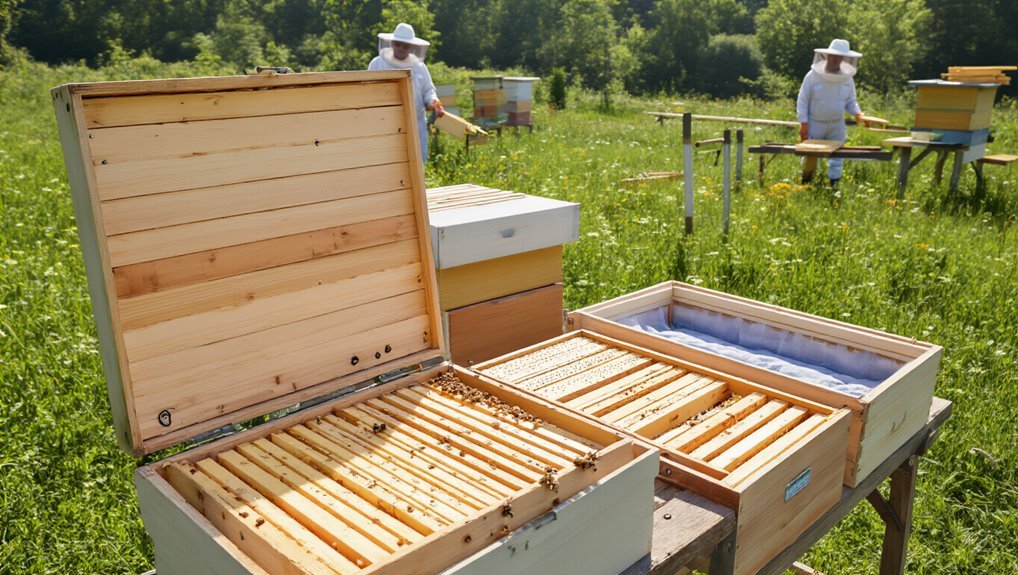
Although there are a few good options out there, we usually start by deciding between top bar and Langstroth hives because that choice shapes everything else. We like to think of top bar as simpler, more horizontal, and maybe friendlier for small yards, while Langstroth gives standardized frame types that fit lots of tools. In my experience Langstroth frames are versatile — they work in horizontal designs too, which is handy. Hive materials matter: cedar, pine, or even some composites affect durability and insulation. Horizontal hives often insulate better and save us lifting heavy boxes. It’s practical. We’re not saying one is perfect; maybe you’ll prefer the feel of a top bar. I think compatibility wins for newcomers, honestly. Let’s weigh pros and cons.
Protective Apparel and Veils
After we’ve picked our hive style and frames, the next thing to think about is what we wear when we’re checking the bees. We usually start with a jacket and hat veil — I think it’s the best for beginners because veil comfort matters; it keeps face strikes away while giving a clear view. Gloves are an option, though they cut tactile feel. Protective gear comes ventilated or not; fabric ventilation is key on hot days. Full suits exist if we want more coverage. Maybe we’ll try different combos. Table below sums trade-offs.
| Gear | Benefit |
|---|---|
| Jacket + veil | Visibility, protection |
| Ventilated fabric | Cooler; less sweat |
| Gloves | Protection; less touch |
We’re learning, and it’s okay to experiment as seasons change. try light layers. Stay safe.
The Essential Hive Tool and Variations
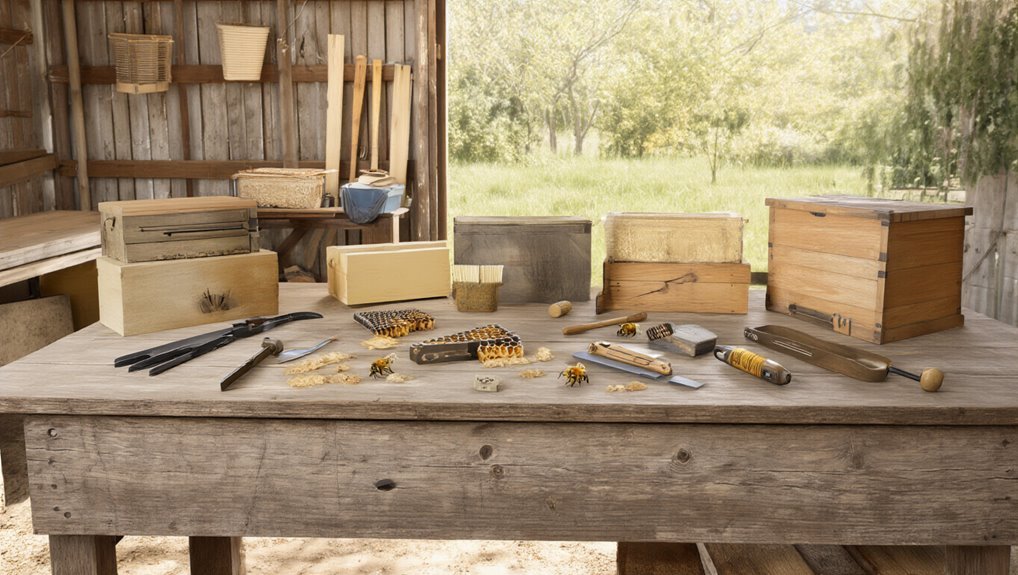
A hive tool is one of those little implements we quickly learn we can’t live without; it’s the crowbar, butter knife and Swiss Army blade of the bee yard all rolled into one. We use it to detach comb, pry frames apart, and scrape propolis — it’s indispensable in Langstroth, Warre, and top-bar hives alike. In my experience a good tool stays with you for years. Look at tool materials first: hand-forged 1/4 inch steel is tough and lasts. Some models combine a comb knife with the traditional tool, like the Bee Built option, and we like that. Design features matter: bevels, hooks, and a comfy grip save time and bruised fingers. Maybe it sounds dramatic, but we really do need one. today honestly
Smokers and Fuel for Calm Inspections
The smoker is one of those tools we reach for before we even open the hive because it genuinely changes the mood out there. We use a stainless steel smoker with a wrap-around heat shield and bottom grate; it feels solid and keeps our hands safe. Smoke prompts bees to gorge on honey, and it masks the banana candy alarm pheromone—so inspections go calmer. Smoke duration varies by fuel and how you puff; in my experience a good load gives thirty to forty minutes, maybe longer if you manage airflow. Fuel sourcing matters: dry burlap, pine needles, wood pellets—pick clean, low-resin materials. We’re careful, though, and we experiment. It’s simple, really. Well, simple-ish; practice makes it comfortable. We learn something new each hive visit.
Practical Helpers: Bee Brushes and Queen Catchers
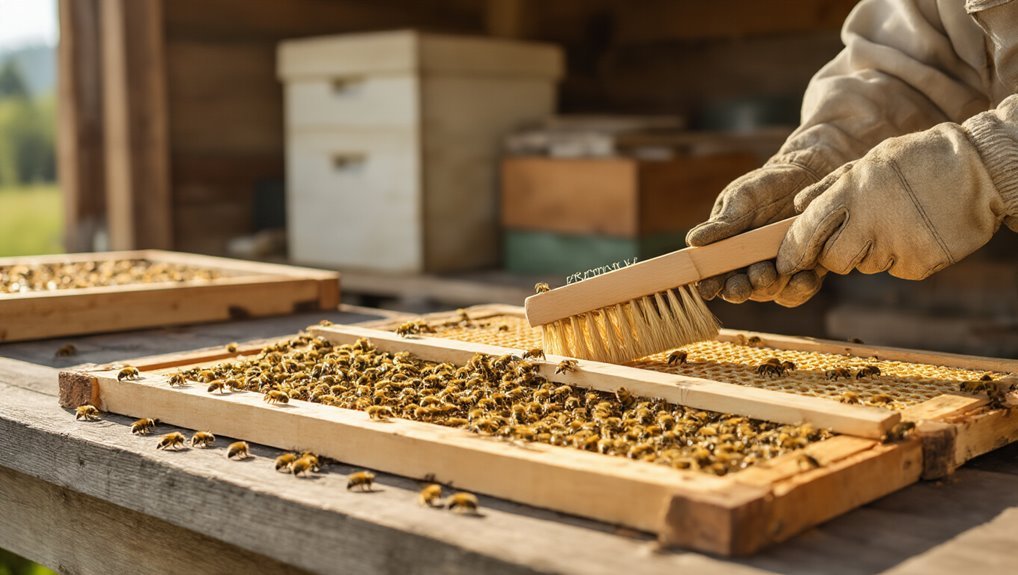
Practical-tools like a soft bee brush and a queen catcher are the kind of things you don’t grab for dramatic effect but reach for when you need finesse. We use a bee brush to gently move bees off frames or surfaces so repairs and honey work go smoothly. Brush ergonomics matter; a comfortable handle keeps our wrist from tiring during routine checks. We try not to overuse it—bees can react, even aggressively, so sparing strokes are best. A queen catcher isn’t essential and we often leave the queen alone. But when needed, Catcher usage lets us manage her with minimal disturbance, which fits natural beekeeping. I think it’s like using tweezers for a delicate job—obvious, but useful. Oops, that sounded clumsy; rephrase: it’s handy.
Honey Harvesting Gear and Extraction Tools
When we move from gentle handling to actually taking honey, we reach for a different set of tools that change the rhythm of our work.
- Capping tools — scratcher or uncapping knife for removing wax caps.
- Two-frame hand-crank extractor for beginners; electric options exist.
- Layens extractors, compatible with Layens and Langstroth frames.
- Alternative: fruit-press or press then strain through cheesecloth; also bring smoker and hive tool.
We like the hand crank for learning; it’s slower but teaches control. In my experience, these items make the sticky harvest manageable, and well, maybe a bit satisfying. I’m not entirely sure, but you’ll probably enjoy mastering this part of beekeeping. I think we’ll get better each season, learning fast and making mistakes too.
Frequently Asked Questions
What Type of Feeder and Sugar Syrup Ratio Should I Use for New Colonies?
We recommend using a frame feeder or entrance feeder with one-to-one sugar syrup for new colonies; we’ll adjust for seasonal feeding, monitor intake, and consider queen genetics’ vigor when deciding duration, ensuring support for you.
How Do I Source Healthy Bees or Nucs for Starting a Hive?
Like choosing seed for a garden, we’ll advise you to buy from reputable breeders or local clubs; prioritize nuc selection with disease-free frames and confirmed queen sourcing, inspect health, temperament, brood pattern, and request records.
What Winterizing Supplies Are Necessary for Cold Climates?
We recommend Hive wraps, Insulation quilts, entrance reducers, ventilation blocks, mouse guards, and ample winter feed; we’ll monitor moisture and wind exposure, and you’ll seal drafts while keeping ventilation and emergency fondant or sugar syrup.
Are Medications or Mite Treatments and Diagnostic Kits Required Initially?
Not strictly; we’re recommending mite testing early, but medication necessity depends on results, hive strength, seasonal timing and local pressure, so we advise monitoring regularly and using treatments only when diagnostics indicate need and prevention.
Do I Need Permits, Hive Registration, or Beekeeping Insurance Locally?
Yes, we often need permits required and hive registration varies by area; we’ll check local regulations, register where mandated, and advise you to weigh beekeeping insurance to protect liability and comply with community rules, too.