Most people don’t know that the pain from a bee sting often comes more from venom spreading than the puncture itself. We want to help you suit up right and use smoke calmly, because little choices make big differences. I think gloves and a good veil are like a seatbelt for your skin. Maybe you’re unsure — we’re not perfect, but stick with us and you’ll see why…
Some of the links in this article may be affiliate links. If you make a purchase through these links, we may earn a small commission at no extra cost to you. Thank you.
Essential Protective Clothing for Sting Prevention
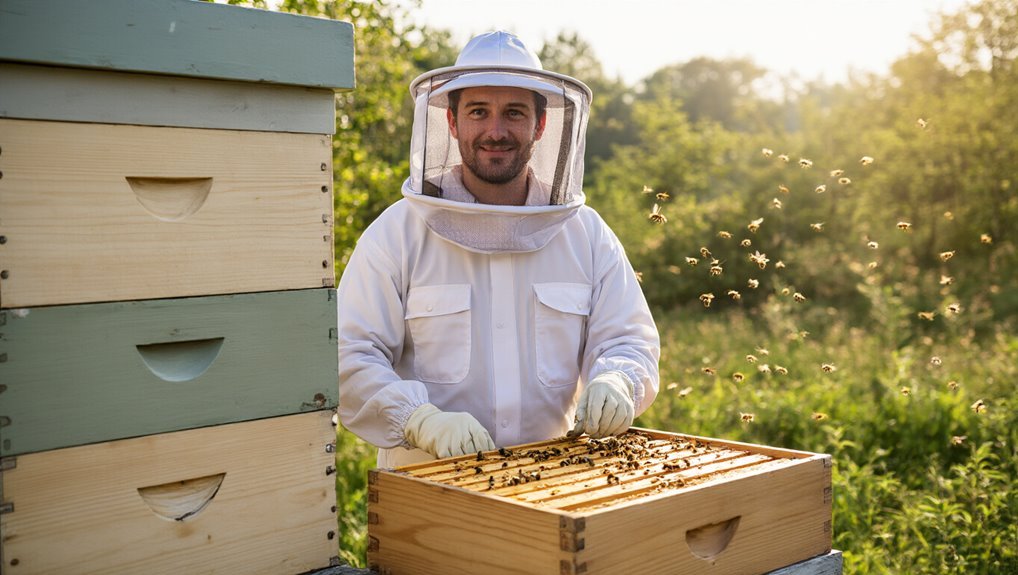
A simple veil is our first line of defense when we work a hive—think of it like putting on sunglasses before stepping into bright light. We recommend at minimum a veil to protect face and eyes, and adding jackets, gloves or a full suit when activity rises. Protective clothing’s sting-resistant, not sting-proof, so we always inspect for gaps, tears, or exposed skin before handling frames. Fit testing matters; try movements to guarantee no openings. Fabric durability is key — thin cloth wears fast. Gloves and thick sleeves lessen hand stings, but don’t use tight cuffs that bees can sneak under. We wear gear as routine, tailoring coverage to tolerance and hive temperament. I think we’d rather be safe, always.
Choosing the Right Bee Veil and Headgear
How do we pick the right veil without overthinking it? We look for veil design that gives full face and neck protection, because a veil is the minimum head protection and must be worn with a suit. We want head coverage with no gaps; check zippers, seams, cuffs and attachments before each visit. In our experience, mesh spacing matters — it’s like window screen for bees. Comfort and visibility matter, too; you want to see clearly and breathe easily. If allergies worry you, keep an Epipen in an exterior pocket for quick access. We’re practical here; test fit, move your head, peek for weak points, and trust what feels secure. Oops, that sounded wordy — we mean concise. We check it every time, no exceptions.
Gloves, Boots, and Layering Strategies
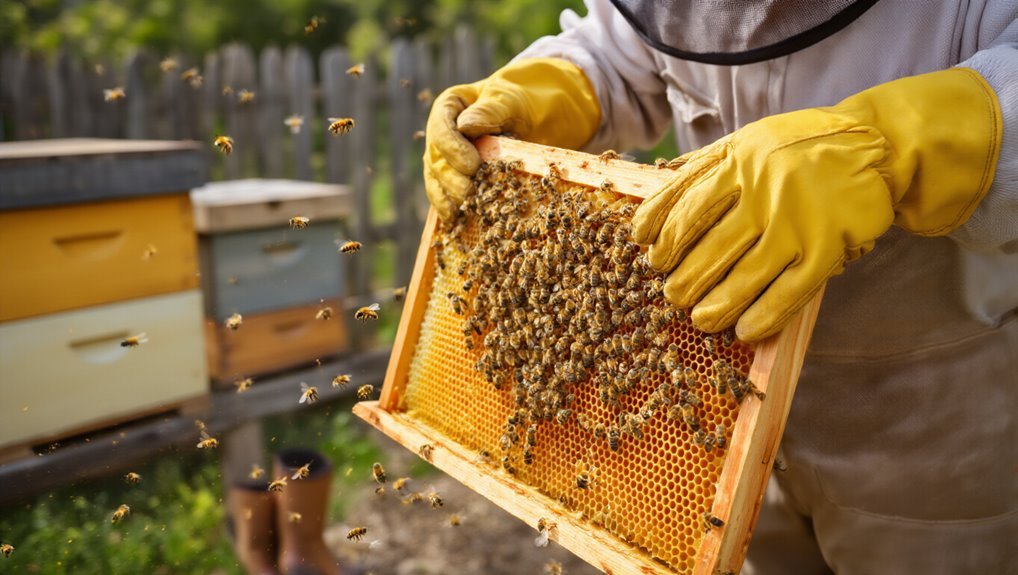
When we’re done checking the veil, we move on to the rest of our kit—gloves, boots and how we layer up for inspections. We always start with a breathable base layer, then a long-sleeve shirt and thick pants; this sandwich keeps us cool and protects from accidental brushes — like armor but flexible. Glove fitment matters more than many think; if they’re too loose bees can find gaps, too stiff and we lose dexterity. Make sleeves snug at the wrists and have gloves overlap jacket cuffs to block stingers. Check boots for good boot insulation in cold weather and for gaps at seams. Inspect gear regularly for tears or bad zippers and replace compromised pieces — we’ve learned that the hard way, honestly.
Smoker Types, Fuel, and Safe Use
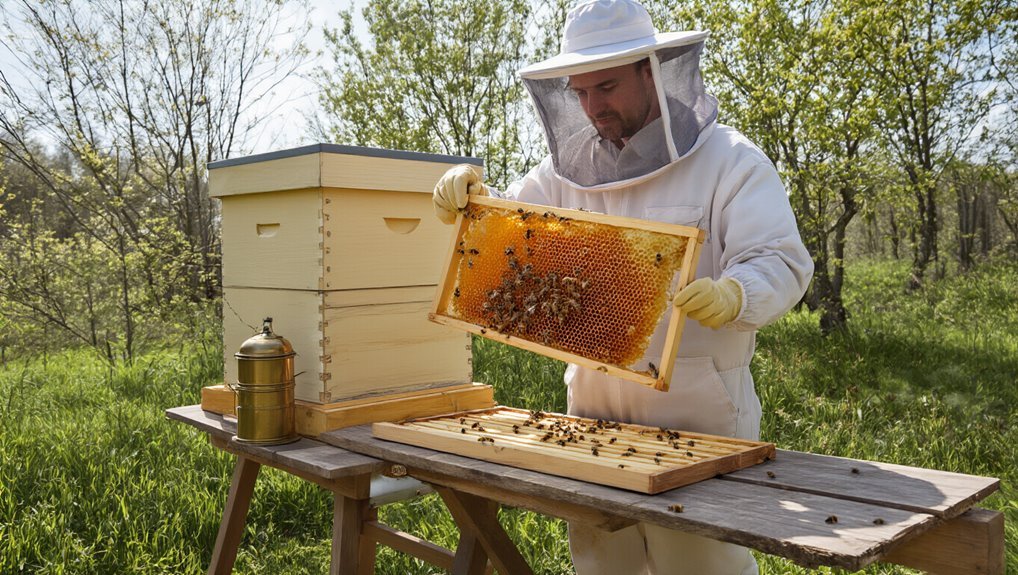
Because the smoker does more than just puff pretty smoke, we’ve learned to treat it like another tool in our kit rather than a magic wand. We compare smoker types—traditional can, bellows, electric—and pick what fits our style and comfort. Fuel strategies matter: pine needles, burlap, or commercial bricks each burn differently, so we test them. Smoke masks alarm pheromones and calms guards; heavier puffing can mimic a forest fire so bees gorge and are less likely to sting. We use measured puffs to move bees off frames instead of squashing or brushing. Move slowly, wear proper gear, and trust smoke, not force. I think small, steady clouds work best; maybe it’s just our habit, but it helps. Oops—habit, I mean routine, right now.
First-Aid and Emergency Equipment for Stings
If someone’s ever had a bad reaction we don’t mess around—an epinephrine auto‑injector (EpiPen) should be on hand for anyone with a suspected severe allergy, and if it’s used you call emergency services right away. We carry a stocked first‑aid kit in our suits or pouch, and we practice epinephrine use and emergency protocols so nobody freezes. Remove stingers by scraping; don’t squeeze. Wash, cold compress, antihistamine if needed. Watch for hives, throat swelling, trouble breathing. We train all handlers on administration and steps; I think it makes us calmer, honestly. Below’s a quick gear checklist —.
| Item | Purpose | Location |
|---|---|---|
| EpiPen | Treats anaphylaxis | Suit pouch |
| Wash supplies | Clean wound | First‑aid kit |
| Cold pack | Reduce swelling | First‑aid kit |
Monitoring continues until help arrives.
Maintenance, Storage, and Inspection of Protective Gear
Having an EpiPen in our suit pouch and a stocked kit is only half the job; we also have to keep the gear itself in top shape so it does its job when things go sideways. We always fully suit up for each apiary visit—veil first, then jacket, gloves, and full suit if needed. Before every use we inspect for tears, holes, loose seams, worn zippers, and pay attention to fabric wear and strap integrity; repair or replace anything compromised. Store gear in a dry, ventilated spot away from sun and chemicals, hang jackets to avoid creases. Keep essentials accessible: EpiPen in one pocket, hive tool in another. I think, in experience, regular glove and veil replacement is key. It’s simple, but it matters.
Frequently Asked Questions
How Can I Tell if I’m Allergic to Bee Stings?
Yes, we can determine if you’re allergic by symptoms and confirmation with a Skin test or Blood test; we’ll review your reaction history, offer testing, and explain results so you understand risks and treatment options.
Are Bee Venom Immunotherapy (Desensitization) Treatments Effective for Beekeepers?
Like a lighthouse guiding wary sailors, we say yes: bee venom immunotherapy’s clinical efficacy is proven and its safety profile’s acceptable; we’ll consider risks, monitor reactions, and adjust therapy over time so you stay protected.
Do Multiple Stings Increase Long-Term Health Risks?
Yes — we believe multiple stings can raise long-term risks; cumulative effects may alter your immune response, increasing allergy or organ strain over time, so we’re recommending monitoring exposures and seeking medical advice if reactions change.
What’s the Difference Between Honeybee and Wasp Stings Medically?
Picture bees and wasps arguing; medically, we’ll tell you honeybee stings leave barbed stingers and deposit venom composition that causes local pain, whereas wasps inject different venom composition via clean punctures, provoking immune response patterns.
Can Hive Management Practices Reduce Overall Sting Frequency?
Yes, we can reduce sting frequency by optimizing entrance design for traffic flow and using careful smoke timing during inspections; we’ll manage colony temperament, guarantee adequate forage, and practice calm hive handling to lower aggression.