Yes, you can absolutely make money from beekeeping — and the income potential is far bigger than most people realise. Whether you’re looking for a modest side income or a full-time agricultural business, beekeeping offers multiple overlapping revenue streams that can generate anywhere from a few thousand dollars a year to well over six figures. The global honey market was valued at approximately $9.2 billion in 2024 and continues to grow — and honey is just the beginning.
Some of the links in this article may be affiliate links. If you make a purchase through these links, we may earn a small commission at no extra cost to you. Thank you.
Key Findings at a Glance
- A hobbyist with 5–10 hives can earn $2,000–$8,000 per year from honey sales alone
- A diversified operation with 50–100 hives can realistically generate $30,000–$60,000 annually
- Pollination services are the highest single income source for many commercial beekeepers
- Value-added products like beeswax candles and skincare can triple your effective per-hive income
Can You Actually Make Money from Beekeeping?
The short answer is yes — but your success depends on treating it like a business from the start. The most profitable beekeepers aren’t just honey producers. They’re diversified agricultural entrepreneurs who layer multiple income streams across a calendar year.
Consider the scale of the opportunity: the USDA estimates that honeybees contribute more than $15 billion in value to U.S. crops annually through pollination services alone. Farmers across the country pay beekeepers every season to bring healthy hives onto their land. And that’s before you account for honey sales, beeswax products, queen rearing, workshops, and a growing range of beekeeping-adjacent services.
If you’re still getting your bearings, understanding what beekeeping involves and how to get started will give you a solid foundation before you focus on the income side of the equation.
How Much Do Beekeepers Actually Earn?
Let’s cut straight to the numbers most people actually want to see. Beekeeping income varies enormously based on hive count, location, revenue mix, and how much time you invest — but here’s a realistic picture of what different scales of operation typically generate.
| Scale | Hive Count | Estimated Annual Income | Primary Revenue Source |
|---|---|---|---|
| Hobbyist | 2–10 | $500–$8,000 | Local honey sales |
| Part-time | 10–50 | $8,000–$30,000 | Honey + value-added products |
| Small business | 50–200 | $30,000–$80,000 | Honey + pollination + workshops |
| Commercial | 500+ | $100,000–$300,000+ | Pollination services + wholesale honey |
Premium local honey sells for $10–$20 per pound at farmers markets — compared to just $3–$5 per pound for commercial bulk honey. A healthy hive in a productive location generates 60–100 pounds of harvestable honey per year. Run those numbers across 30 hives and you’re looking at serious money before you’ve sold a single beeswax candle.
A healthy hive in a good season produces 60–100 lbs of harvestable honey. At $15/lb local retail, that’s $900–$1,500 per hive per year — before any value-added products.
What Does It Cost to Start a Beekeeping Business?
One of the most appealing things about beekeeping as a business is the relatively low barrier to entry. A modest two-hive startup can be set up for under $1,500 — and most beekeepers recoup their initial investment within the first or second honey harvest.
- Two starter Langstroth hives (boxes, frames, foundation): $300–$500
- Protective gear (suit, gloves, veil): $100–$200
- Basic tools (hive tool, smoker, bee brush): $50–$100
- Nucleus colonies or package bees (2 colonies): $300–$400
- Extraction equipment or rental access: $200–$500
- Hive registration and licensing (varies by state): $0–$50
Total startup cost: approximately $950–$1,750. If you invest in a solid beginner beekeeping book, add another $20–$40 — it’s one of the highest-return investments you’ll make in your first year, easily paying for itself by helping you avoid costly early mistakes.
Equipment choices matter more than beginners typically realise. Choosing the right beekeeping box for your setup makes routine hive inspections faster, reduces bee stress, and ultimately improves honey yields — all of which feed directly into your bottom line.
What Are the 10 Most Profitable Beekeeping Revenue Streams?
Here’s where beekeeping gets really exciting. The beekeepers who earn the most don’t rely on a single revenue source. They run diversified micro-businesses that generate income year-round. Let’s walk through each stream in detail.
1. Raw Honey Sales
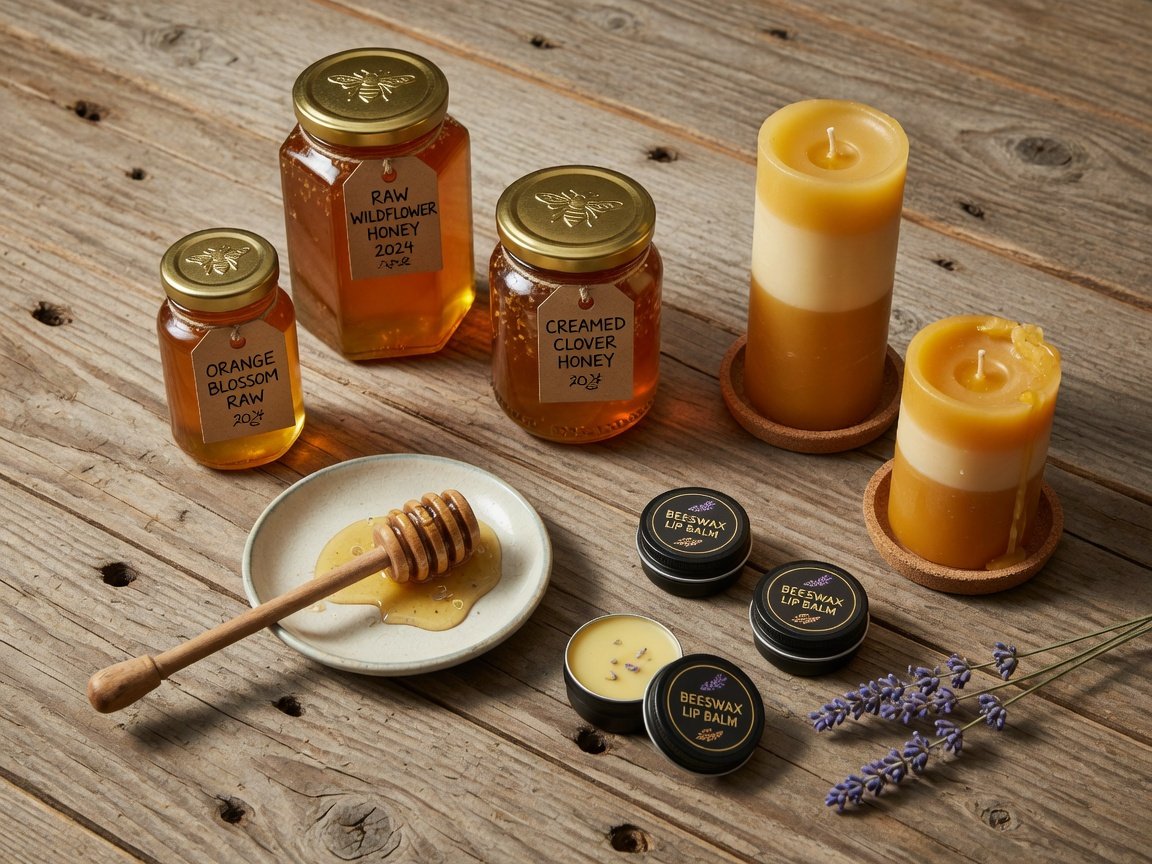
This is the foundation of most beekeeping businesses. Selling direct-to-consumer — at farmers markets, farm stands, or through a simple website — generates far higher margins than wholesale supply. Local raw honey commands $10–$20 per pound in most urban and suburban markets, compared to $3–$5 per pound for commercial bulk product. Specialty varieties like manuka, raw wildflower, or monofloral lavender regularly sell for $25–$50 per pound or more. Building a reputation for a distinctive local honey is one of the most powerful long-term strategies a small-scale beekeeper can pursue.
2. Beeswax Products
Raw beeswax sells for $10–$20 per pound, but processed into value-added products, it becomes dramatically more profitable. A beeswax candle that costs $2 in materials can sell for $15–$25. Lip balms, furniture polish, wood conditioner, beard balm, and skincare creams all carry similarly strong margins. Some beekeepers report earning more from beeswax products than from honey itself — with just 20 hives, a modest product range can add $10,000–$20,000 in annual revenue.
3. Pollination Services
This is the big earner for medium and large operations. U.S. almond growers alone spend an estimated $300–$400 million on hive rental each year. Individual hive rental rates for California almond pollination reach $200–$250 per hive for a six-to-eight-week seasonal contract. Even locally, fruit orchards, berry farms, and vegetable growers pay $75–$150 per hive per season for reliable pollination services. With 50 hives on a regional pollination contract, that’s $3,750–$7,500 from a single client relationship — stacked on top of your honey income.
4. Selling Nucleus Colonies and Package Bees
Healthy, locally-adapted bee colonies are in near-constant demand, particularly in spring when new beekeepers are starting out. A nucleus colony — five frames of bees, brood, honey stores, and a laying queen — typically sells for $150–$250. Package bees (three pounds of bees with a mated queen) sell for $130–$180. A beekeeper managing 30 established hives can split 10–15 of them in spring and sell the splits as nucs, generating $1,500–$3,750 in additional spring income with minimal extra labour and without meaningfully reducing summer honey production.
5. Queen Rearing and Sales
Mated, locally-adapted queens sell for $30–$60 each under normal market conditions, with hygienic or specially bred queens commanding $80–$150 or more. Queen rearing requires genuine skill and precision, but it’s one of the highest-margin activities in all of beekeeping. A dedicated queen-rearing operation producing 200–500 queens per season can generate $10,000–$30,000 in revenue with remarkably low input costs beyond time, expertise, and established colonies to draw from.
6. Beekeeping Classes and Workshops
Teaching is one of the most scalable income streams available to experienced beekeepers. Interest in beekeeping has grown significantly in recent years, particularly in urban and suburban areas where people want to connect with sustainable food production but lack practical knowledge. A half-day beginner workshop priced at $75–$150 per person with 10–15 attendees generates $750–$2,250 per event. Run one per month from March through September and you’ve added $5,250–$15,750 to your annual income — often with minimal ongoing preparation time once your curriculum is established.
7. Bee Removal Services
When honeybee colonies establish themselves in walls, chimneys, roof spaces, or garden structures, homeowners need professional help. Bee removal services typically charge $200–$1,000+ per job depending on difficulty and access. Here’s the bonus: you often get to keep the bees, adding a free colony to your operation at no cost. In urban and suburban areas with strong bee populations, a beekeeper offering removal services can complete several jobs per week during swarm season — generating substantial income while genuinely helping both the homeowners and the bees.
8. Agritourism and Hive Experiences
Farm tourism is a growing industry, and beekeeping operations are perfectly positioned to capitalise on it. Guided hive tours, honey-tasting experiences, and adopt-a-hive programmes are all proven income generators. Typical pricing runs $25–$50 per person for a group hive tour, and groups of 10–20 people make for a very profitable afternoon. Corporate hive sponsorship programmes — where businesses pay an annual fee to sponsor a named hive as part of their sustainability commitments — are an emerging model with fees ranging from $500 to $5,000+ per hive per year.
9. Propolis and Specialist Bee Products
Propolis — the resinous substance bees use to seal their hives — is in growing demand for its antimicrobial properties in the health and wellness market. Raw propolis sells for $15–$40 per ounce, making it pound-for-pound one of the most valuable things that comes out of a beehive. Royal jelly, the nutrient-dense substance fed to queen larvae, commands $30–$60 per ounce due to its intensive extraction process. Bee pollen is another specialist product that sells consistently at health food markets for $10–$20 per ounce.
10. Online Content and Digital Products
A beekeeping blog or YouTube channel can generate meaningful passive income through advertising revenue, affiliate marketing, digital downloads, and online course sales. The beekeeping audience is engaged, enthusiastic, and perpetually hungry for practical knowledge. While building an online audience takes time, the potential for income that doesn’t require you to be physically present with your hives makes it one of the more interesting long-term opportunities in the space — particularly if you already enjoy writing or filming.
How Should You Price Your Honey for Maximum Profit?
Pricing is where many new beekeepers leave serious money on the table. The temptation to undercut competition is understandable — but it’s almost always the wrong move. Local, raw honey is a premium artisan product and should be priced accordingly.
Consumer research consistently shows that buyers pay a 40–60% premium for locally-sourced honey over supermarket equivalents, particularly when they understand the story behind the product. Your pricing strategy should reflect four key factors.
- Your actual production costs — equipment depreciation, supplemental feed, mite treatments, extraction, labelling, and your labour at a reasonable hourly rate
- Your target market — urban farmers markets consistently support higher prices than rural roadside stalls
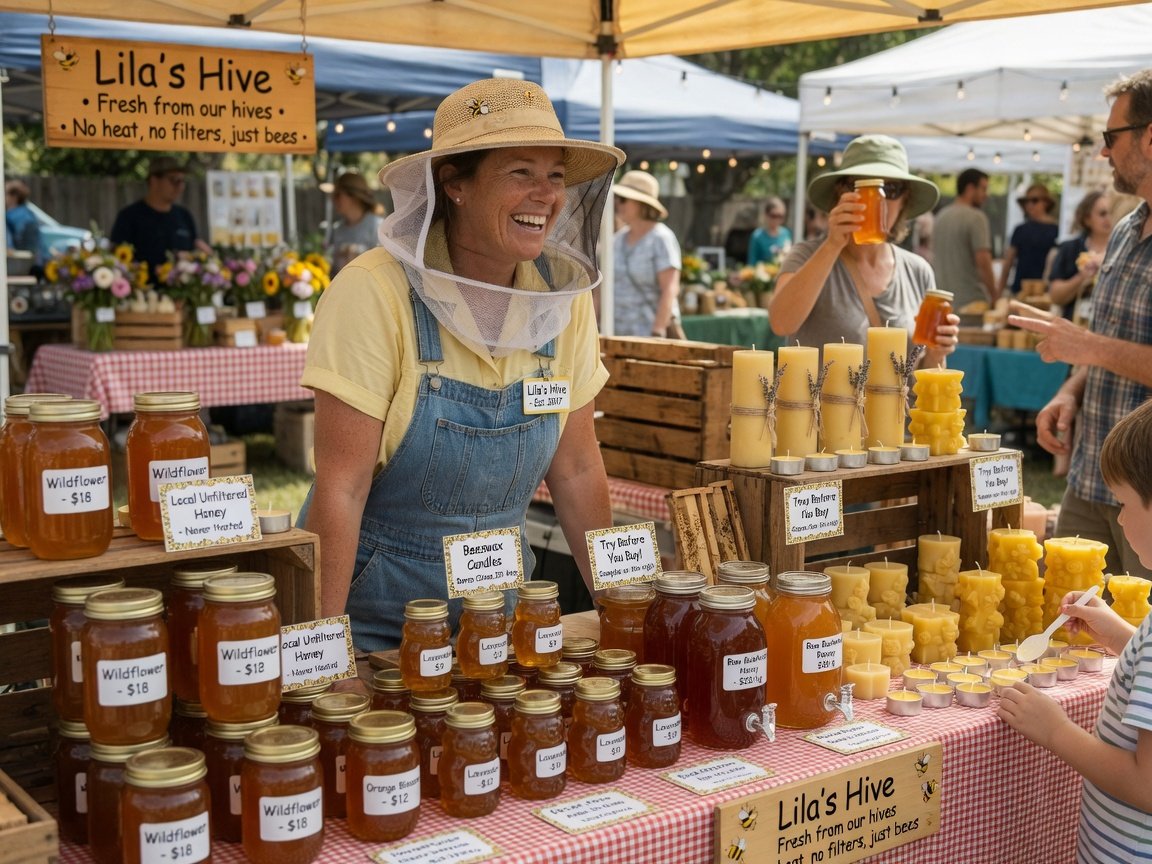
- Your presentation — branded, professional-looking jars with clear origin information command 20–30% more than plain containers
- Your honey’s uniqueness — monofloral varieties like lavender, clover, or heather justify premium pricing that wildflower blends cannot command
A simple pricing formula: calculate your total cost per pound (including all overheads and your time at a fair hourly rate), then multiply by 3–4 to arrive at a retail price that covers costs and generates genuine profit. If that number feels uncomfortably high, your instinct may be the problem — not the price.
Which Beekeeping Method Works Best for a Profitable Business?
The management method you choose has a direct impact on your earning potential, your time investment, and the market you can serve. Understanding the different types of beekeeping and how methods compare is an important step before committing to equipment and setup.
Commercial operations overwhelmingly favour Langstroth hives for their standardisation, ease of inspection, and compatibility with honey extractors and pollination contracts. Smaller artisan producers sometimes opt for top-bar or Warré hives to differentiate their product story and appeal to buyers who value traditional or natural methods.
Certified organic honey production commands a 25–50% price premium at retail, but it requires strict management protocols and third-party certification — a meaningful investment of time and paperwork. Treatment-free beekeeping appeals to a growing premium market segment, though it typically carries higher colony loss rates that must be factored honestly into your business model.
What Are the Biggest Challenges to Making Money from Beekeeping?
Honest guidance matters here. Beekeeping has real challenges that can erode profitability if you aren’t prepared for them going in.
Colony losses are the most significant financial risk. The Bee Informed Partnership has reported average annual colony loss rates of 40–50% among surveyed U.S. beekeepers in recent years, driven largely by Varroa mite infestations. Robust integrated pest management — including regular mite counts, timely treatment decisions, and hygienic stock selection — is not optional. It is the foundation of a viable operation.
Regulatory requirements vary widely by location. Most U.S. states require hive registration (usually free or very low cost), but selling honey commercially involves compliance with cottage food laws or commercial food handling regulations, which may include kitchen inspections and labelling standards. Research your specific local requirements before investing at scale.
Seasonality is an inherent feature of the business. Honey production is concentrated in spring and summer. Diversifying into value-added products, workshops, and year-round services helps smooth income across the calendar — which is precisely why the most successful beekeepers rarely rely on honey alone.
Local market saturation can be a genuine obstacle if several beekeepers are already well-established at your target farmers market. Differentiation through product quality, consistent branding, specialty variety focus, or a compelling production story is your most reliable response.
How Do You Scale a Beekeeping Business Over Time?
Scaling from hobby to business follows a recognisable path for most successful beekeepers. Here’s a realistic roadmap based on how experienced producers typically grow.
- Year 1–2 (Foundation): Start with 2–5 hives. Focus entirely on keeping bees alive and understanding your local forage. Sell surplus honey at modest prices if necessary — experience is the real asset at this stage.
- Year 2–3 (Growth): Expand to 10–20 hives. Begin producing value-added products. Build a direct customer base at farmers markets or through a simple online shop.
- Year 3–5 (Diversification): Scale to 30–50 hives. Introduce pollination service contracts. Consider teaching beginner workshops. Develop consistent wholesale relationships with local retailers and restaurants.
- Year 5+ (Specialisation): Choose a niche — queen rearing, certified organic production, agritourism, or education — based on your genuine skills and local market opportunity.
Keeping detailed records of every hive’s performance, honey yields, costs, and colony health is essential at every stage. Good data helps you identify your most productive colonies, make informed split decisions, and spot problems early. For a structured approach to tracking hive performance, comprehensive beekeeping notes and hive management frameworks give you a ready-made system to build on from day one.
Understanding the broader significance of beekeeping — from food security to pollinator conservation — also gives you a powerful marketing narrative. Customers who understand why beekeeping matters become loyal buyers and enthusiastic word-of-mouth advocates for your products.
How Do You Market Your Beekeeping Products Effectively?
The most effective marketing channels for small-scale beekeepers tend to be personal, local, and visual. Here’s what consistently works in practice across different markets and regions.
- Farmers markets: High foot traffic, immediate cash sales, and direct customer relationships. Your presence and story are the marketing — no ad budget required.
- Local grocery stores and delis: Lower margins but consistent volume. Ideal for moving bulk product reliably through the off-season.
- Instagram and Facebook: Visual platforms perfectly matched to honey, hives, and handcrafted products. Short behind-the-scenes videos of hive inspections and honey harvests consistently outperform static posts.
- A simple website with online ordering: Enables year-round sales beyond your immediate geography. Even a basic e-commerce setup can generate meaningful revenue from customers who discover you at a market and want to reorder conveniently.
- Email marketing: Dramatically underused by most beekeepers. A monthly newsletter with seasonal updates, recipes, and product availability builds a loyal customer base that buys repeatedly — often for years without prompting.
Word of mouth remains the most powerful marketing tool of all. Customers who genuinely love your honey will refer friends, family, and colleagues without being asked. Every interaction at a market stall, workshop, or hive tour is a marketing event. Treat it accordingly.
What Does the Future of Beekeeping as a Business Look Like?
The business outlook for beekeeping heading into 2026 and beyond is genuinely positive. Consumer demand for raw, local, and artisanal food products continues to rise. Awareness of pollinator health is now mainstream. And growing interest in sustainable, regenerative agriculture places beekeeping squarely in a cultural sweet spot that shows no sign of fading.
A few trends worth tracking as you build your operation:
- Urban and rooftop beekeeping is expanding rapidly in major cities, creating hyper-local honey markets and premium city-branded honey products that command extraordinary retail prices
- Direct-to-consumer e-commerce is reducing reliance on middlemen and improving margins for small producers who invest in even a basic online presence
- Honey subscription boxes — monthly deliveries of seasonal or rotating honey varieties — are gaining real traction as a recurring revenue model that smooths cash flow across the year
- Corporate hive sponsorships — where businesses pay annual fees to sponsor named hives as part of ESG or sustainability commitments — represent a growing, premium income source with high margins and low ongoing fulfilment overhead
- Medicinal and functional honey products (manuka formulations, propolis extracts, honey-based supplements) are commanding extraordinary prices in the health and wellness sector
The beekeepers who thrive in this environment will be the ones who stay curious, diversify intelligently, and build genuine relationships with their communities. The hives are the engine; the business is what you build around them.
Frequently Asked Questions About Making Money from Beekeeping
How many hives do you need to make money from beekeeping?
You can generate meaningful income with as few as 5–10 hives, particularly if you sell direct-to-consumer and add beeswax products to your offering. Most beekeepers who treat it as a primary income source operate 50–200 hives. That said, profitability depends more on your revenue mix and business model than on raw hive count alone.
Is beekeeping profitable as a side hustle?
Absolutely — and it’s one of the more scalable agricultural side hustles available. A part-time beekeeper with 10–20 hives can realistically earn $5,000–$15,000 per year alongside a primary job, especially if they sell honey at farmers markets and produce basic value-added products like beeswax candles or lip balm.
How much can a beekeeper make per hive?
A well-managed hive in a good location can generate $500–$1,500 per year from honey sales alone at direct-to-consumer pricing. Add pollination income, beeswax product revenue, and nuc sales, and per-hive revenue can reach $2,000–$3,000 for a well-diversified operation.
What’s the easiest beekeeping product to sell?
Raw honey in attractive, labelled jars is consistently the easiest product to sell — it’s immediately understood, widely loved, and naturally gift-able. Beeswax candles are a close second, particularly in autumn and winter when gift-buying peaks. Both products require minimal processing and command strong retail margins.
Do you need a licence to sell honey?
Requirements vary by location. In most U.S. states, honey sold at farmers markets or roadside stalls falls under cottage food laws and requires only basic labelling compliance — no formal licence needed. Selling to retailers or producing at commercial scale typically requires compliance with food safety regulations and may involve kitchen inspections. Always check your specific state and local rules before selling commercially.
How long before a beekeeping business becomes profitable?
Most beekeepers recoup their initial startup investment within the first or second full honey season — typically 12–24 months from starting. Consistent profitability, where income meaningfully exceeds ongoing costs, usually takes 2–3 years as you build hive count, customer relationships, and product range simultaneously.
What is the most profitable type of honey to produce?
Specialty monofloral honeys — derived primarily from a single nectar source like lavender, clover, heather, manuka, or orange blossom — command the highest retail prices, often 25–100% more than wildflower honey. Certified organic honey also carries a significant price premium. The key is matching your production approach to the forage genuinely available in your specific location.
Your Next Steps: A Simple 90-Day Action Plan
Ready to turn your interest in beekeeping into a real income stream? Here’s a concrete, actionable starting point you can follow regardless of your current experience level.
- Days 1–14 — Research and prepare: Identify your local hive registration requirements. Check your nearest farmers market for vendor stall availability. Calculate your startup budget and identify your equipment suppliers.
- Days 15–30 — Order and connect: Order your starter equipment and nucleus colonies for spring delivery. Join your local beekeeping association — the mentorship network alone is worth the membership fee many times over.
- Days 31–60 — Install and track: Set up your hives and begin weekly inspections through the active season. Start a simple hive record-keeping system. Design your honey jar labels and set your retail pricing before the first harvest.
- Days 61–90 — Diversify: Identify two or three revenue streams beyond honey — beeswax candles, a beginner workshop series, or an enquiry to a local fruit farm about pollination services — and take the first concrete step toward each one.
Beekeeping rewards patience, curiosity, and consistency above all else. The beekeepers who build genuinely profitable operations aren’t always the ones with the most hives — they’re the ones who treat every harvest, every customer interaction, and every colony inspection as an opportunity to learn and improve. Start where you are, build methodically, and the income will follow.
—
Pingback: how to start beekeeping for free - rwgreeff.com