We’ve put together a compact, free PDF glossary that feels like a map for new beekeepers—simple, maybe obvious at times, but actually quite useful. In my experience it clears up the jargon fast. We’ll cover hive parts, life stages, gear, and basic health signs, and we’ll include a quick checklist and download link—so stick around to grab the guide and get your first steps sorted.
Some of the links in this article may be affiliate links. If you make a purchase through these links, we may earn a small commission at no extra cost to you. Thank you.
What Is Apiculture and Why It Matters
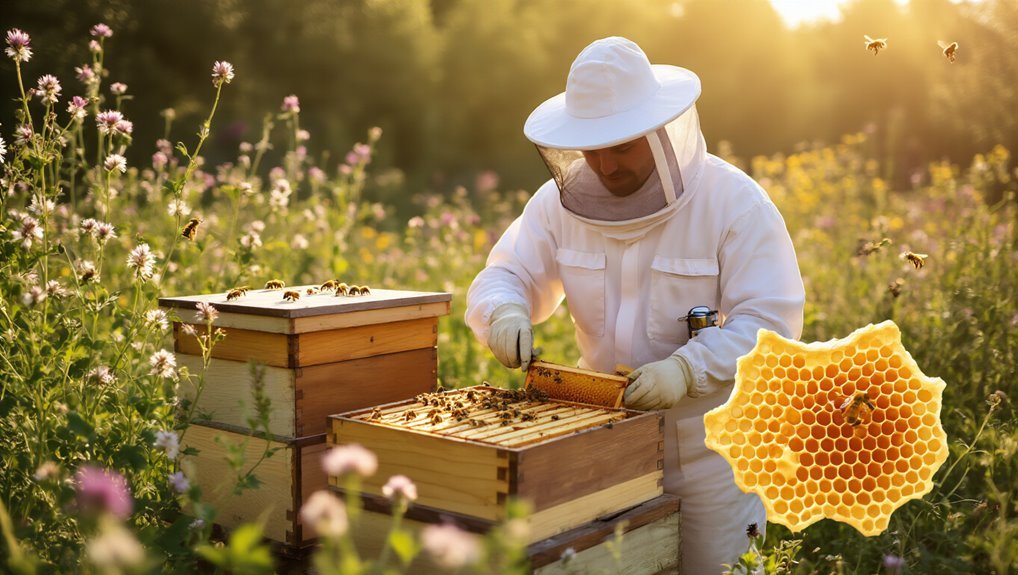
What exactly is apiculture, and why should we care? We study the science and art of raising honey bees in managed apiaries, and we think it’s more than hobby or honey; it’s a backbone for many farms. Managed colonies get moved to bloom different crops to boost yields and quality — it’s practical and deliberate. Pollination economics shows how hive placement affects food prices and farm income. In our experience, honey, beeswax and other hive products matter, but the bigger thing is crop pollination and food security. Biodiversity impact is real: bees connect wild plants and crops, supporting ecosystems. Maybe we’re biased, but apiculture feels like stewardship, not just production. It’s important, truly. We’ll explore practical steps next, and you’ll find it useful really.
Core Anatomy and Life Stages of Honey Bees
Let’s explore how a honey bee’s body and life cycle fit together, because once you see the pieces the whole colony makes more sense. We look at abdomen anatomy first: it holds the honey stomach, true stomach, intestines, sting and reproductive parts, so it’s central to feeding and defense. Then there’s metamorphosis—egg, larva, pupa, adult—which feels like a tiny drama, actually. The brood development inside the brood chamber is steady work for nurses and a clear sign of colony health. We note castes: workers, drones, queens, each with roles; queen mating starts new colonies. I think it’s elegant, and maybe we’re biased, but understanding these stages makes beekeeping easier, really. Sometimes we miss small cues—oops, we mean notice small cues—and that can cost time often.
Understanding Hive Components and Apiary Layout
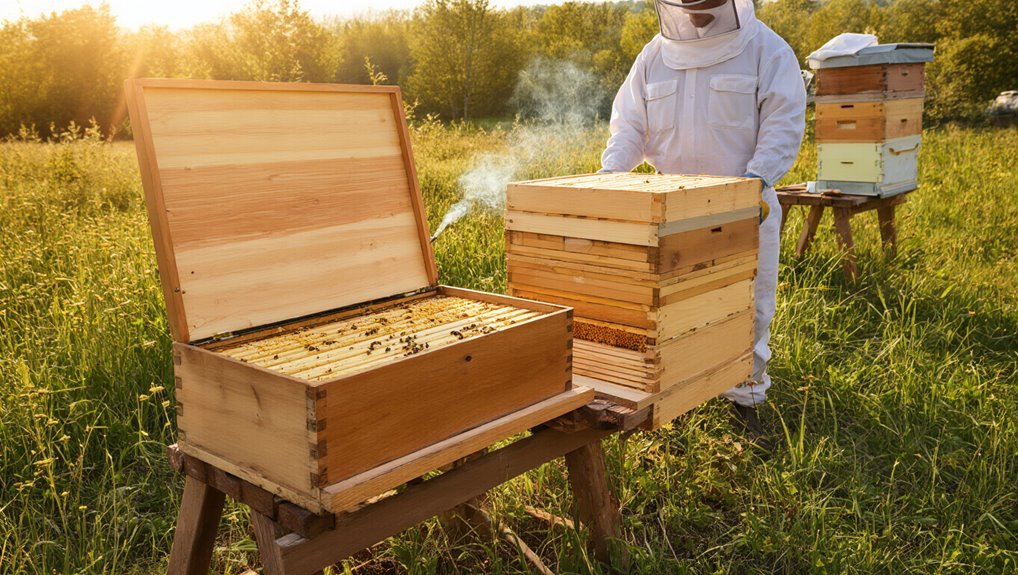
An apiary is where we keep our bees, hives, and all the gear that goes with them, and getting the layout right makes the rest of beekeeping much easier. We arrange hive bodies on solid bottom boards, thinking about wind, sun, and access. The brood chamber should be central and stable; that’s where the young develop, so we pay attention to frame placement and bee space. We like clear paths between rows — it’s practical and calming. I think of an apiary like a small village where each hive has a front door. Maybe we’re overly fussy, but it helps. Practical checklist:
- Choose level sites.
- Orient hive entrances.
- Guarantee good drainage.
- Space for inspection.
We learn as we go, always.
Essential Beekeeping Equipment for Beginners
A few basic tools will make starting out in beekeeping a lot less scary and a lot more fun. We’ll want protective gear first: a bee veil keeps our face and neck safe so we can focus, not panic. Then simple tools — a bee brush to gently sweep bees off combs; it’s like using a soft broom, really. For feeding and honey work there are practical helpers: a bee escape, a Boardman feeder, and a division board feeder, each serving different needs when we’re managing hives. I think starting light is best — don’t buy every gadget. Well, maybe we’ll get carried away, but try to learn each tool’s purpose. It’s rewarding, honest work, and we’ll learn.
Common Diseases, Pests, and Colony Health Signs
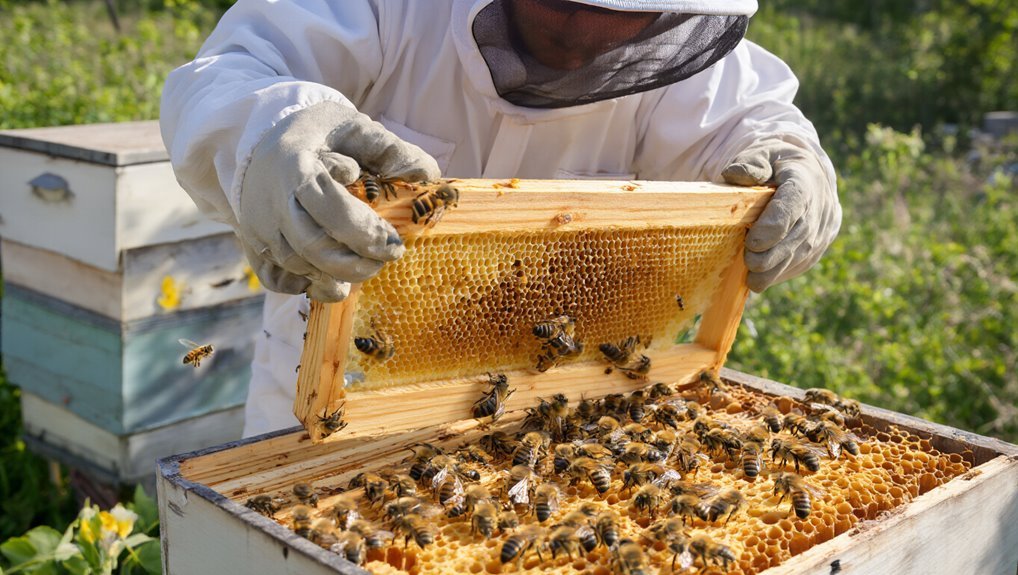
After we’ve learned the tools, we also need to watch for what can go wrong in a hive; gear won’t help if the colony’s sick or stressing out. We check brood frames for signs like chilled brood, odors, or sunken cappings. I think it’s important we understand American foulbrood is caused by Paenibacillus larvae — it’s reportable, so don’t ignore patches. Tracheal mites and other pests can weaken bees; acarine disease from Acarapis woodi behaves subtly. We watch for absconding swarms when conditions get bad. We’re overly cautious, but that’s okay. Here are key signs to monitor:
- Irregular brood pattern and sunken cells
- Foul, rotted smell (AFB concern)
- Excessive dead or chilled brood
- Heavy mite loads or unusual bee behavior
Honey Harvesting, Processing, and Storage Basics
Harvesting honey is one of those sweet rewards that makes all the hive work worth it, and we’ll want to be sure the supers are ready before we disturb the bees. Well, we look for fully capped cells — that’s our cue that brood isn’t being raised and frames are harvestable. We uncap combs with a knife or fork so honey flows during extractor operation; then we spin in a manual or motorized extractor to separate wax by centrifugal force. After spinning we let honey settle, skim impurities and filter if wanted. Watch moisture control closely — aim for about 18–20% or you’ll risk fermentation or rapid crystallization. If it’s high, dehumidification or more resting helps. Store in clean sealed jars, cool and dark.
Practical Tips for Starting and Managing Your First Colony

Starting with one healthy colony makes things simpler — we’ll get to know its rhythms without getting overwhelmed. We recommend careful colony sourcing from a reputable supplier and a sunny, sheltered apiary so bees forage well. Early inspections every 7–10 days for 4–6 weeks tell us about brood pattern, stores, and pests. Use a smoker, gentle tools, and don’t crush brood. Document queen selection, introductions, strength, and weird activity to spot problems. Provide diverse forage and sugar syrup in dearths. Maybe we sound cautious, but it’s worth it.
- Choose supplier reputation and genetics.
- Inspect regularly; note details.
- Minimize stress with proper tools.
- Feed and site hive for forage.
We think we’ll learn fast; small mistakes teach us, erm, actually they do.
Frequently Asked Questions
What Is the 7 10 Rule in Beekeeping?
Like a clockwork promise, the 7–10 rule tells us that eggs reach capped brood seven to ten days after being laid; we’re using it in practical training, mindful of ethical considerations, you can detect problems.
What Is the 3 3 3 Rule for Bees?
The 3-3-3 rule isn’t universally defined; we’ll check sources, since hive math and colony metrics vary, and we’ll want the original context to interpret any three-three-three guideline reliably for your bees before advising management steps.
What Is the Fancy Word for Beekeeping?
Like a gardener tending golden orchards, it’s apiculture; we’ll explain apiculture etymology and bee linguistics so you can see how the fancy term frames the science and art of caring for honey bee colonies today.
What Is a Super in Beekeeping Terms?
A super is a box above the brood chamber for Honey storage; we’re also adding supers to increase Frame capacity, so you harvest honey easily, and we remove or replace them as colonies fill comb.