We call it “smoking”—a gentle euphemism for what we’re really doing. We use measured puffs to calm bees, not to scare or hurt them, and I think it’s more like soothing than domination. It’s not about starting a fire—it’s about masking alarm pheromones; well, not starting a fire, I mean, not literally. Maybe you’ll be surprised, probably you will, and once you see those puffs work you’ll want to learn more.
Some of the links in this article may be affiliate links. If you make a purchase through these links, we may earn a small commission at no extra cost to you. Thank you.
History of Smoke in Beekeeping
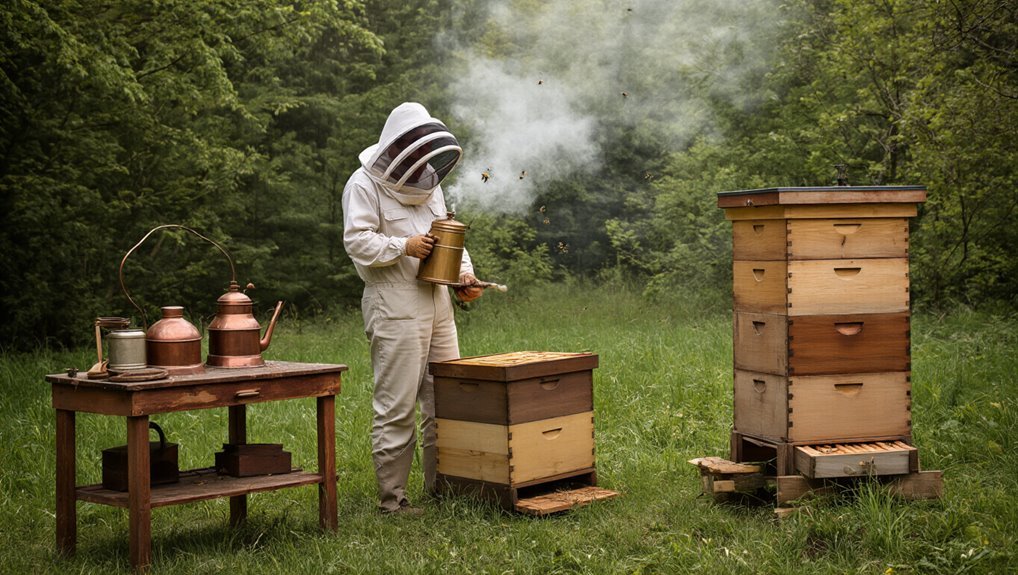
Starting with smoke has been part of honey hunting for as long as people have been taking bees’ work for themselves — it’s almost as old as the practice of collecting wild honey. We trace an ancient practice back to Indigenous Native Americans who burned puffball fungus — puffball lore, really — to anesthetize bees. By 1853 that approach turned into general bee anesthesia. Later scientists found hydrogen sulfide was the key combustion product. Moses Quinby then gave us the modern smoker in 1873, and Tracy F. Bingham refined it with a 1903 patent. We think this history matters; it ties folk knowledge to tools we still use. It’s simple, elegant, and, well, probably more connected to culture than we admit. We notice, really, often.
How Smoke Affects Bee Behavior
How exactly does smoke change what bees do? We understand smoke masks alarm pheromones like isopentyl acetate, so the colony doesn’t coordinate stings as well. It also makes bees think there’s a fire, triggering a survival mode where they gorge on honey — a foraging shift toward storage use rather than defense. That feeding response lowers agitation; in effect we get defense suppression and fewer stings. I think it’s like someone whispering in a crowded room and chaos calms. Alarm scents can stick to our suits and gear, though, and may draw attention even after the smoke’s gone. We’re not claiming magic here — maybe it’s imperfect — but in my experience it reliably reduces aggression, most of the time. We should still use caution around hives.
Step‑by‑Step Guide to Smoking a Hive

Gentle puffing is the name of the game when we’re about to open a hive, and we’ll want to move quickly because smoking usually only calms things for a few minutes. We approach slowly from the rear or sides, avoiding the flight path, and I think the best windows are mid-morning to mid-afternoon when temps are above 70°F. Start with two or three puffs at the entrance to clear bees, then maintain a steady smoke cadence — not constant blaring, but intermittent puffing while we inspect. Entry timing matters; wait for a beat after those puffs before lifting the lid. Keep the smoker smoldering, avoid open flame, and when done we douse it with water. It’s simple, really, but practice helps. Trust us, honestly.
Smoker Design and Fuel Choices
Using a simple metal can with a bellows feels almost quaint, but it’s a design that works — a bottom air intake, a conical lid to trap smoke, and a steady pump of air from the bellows that keeps fuel smoldering instead of flaming. We think smoker construction is about controlled airflow, not complexity. Fuel options include old-school burlap to modern compressed cotton; hop lupulin pellets give strong, aromatic smoke. We’ll list common choices:
- Hessian burlap and pine needles
- Corrugated cardboard and egg cartons
- Rotten wood and herbs
- Compressed pulped paper and cotton
- Hop lupulin pellets (very potent)
We’re not entirely sure, but mixing fuels often helps. I think it’s like tuning a musical instrument; small tweaks change the tone. It works, honestly, always.
Safety and Practical Tips for Beginners

Remember that smoke is a tool, not a toy — we’re trying to calm bees, not pacify them into permanent stupor. We use smoke sparingly, puffing intermittently so embers keep burning instead of blasting a fog that upsets honey or brood. Wear protective gear, have basic emergency procedures written down, and keep the smoker off flammable ground. Avoid open flame; let fuel smolder. Bees regain pheromone sense in about 10–20 minutes, so work calmly and promptly. I think this method feels right, though maybe we tweak it. Oops, that sounded formal—let me rephrase. It’s simple: be careful, be prepared, and enjoy the hives.
| Tip | Why |
|---|---|
| Moderation | Protects honey/brood |
| Puff intermittently | Keeps embers burning |
| Smoker location | Prevents fires |
| Extinguish with water | Ensures safety |
Always.
Frequently Asked Questions
What Is Beekeeping Slang For?
It’s beekeeping slang for the specialized jargon we use to name practices, tools and behaviours, and to convey tacit knowledge; we explore Slang origins and Cultural context so readers get practical, historical and social insight.
What Is Bee Keeper Smoke?
Like smoke signals to a scout, bee keeper smoke is a controlled, smoldering plume that calms bees by its smoke composition and cue; we’ll show you equipment handling and simple gentle puffs to protect hives.
What Is the 7 10 Rule in Beekeeping?
The 7–10 rule guides us to inspect hives every 7 to 10 days during brood rearing; we’re catching problems for you, balance smoke timing, monitor frame spacing, queen laying and brood health, adjust for conditions.
What Is the Beekeeping Age Urban Dictionary?
It’s not a standardized Urban Dictionary term; we find that supposed ‘beekeeping age’ entries are informal. As we dig into slang origins and urban terms, we’re concerned you’ll be misled, so we urge using sources.