Bees will teach you more about boxes than any book, which is interesting because we thought it’d be the other way around. We’re going to talk practicality here—Langstroth for control, top-bar for simplicity, Warre if you want low intervention—though I think there’s no one-size-fits-all. It’s like choosing shoes; fit matters. Maybe you’ll prefer light boxes, maybe heavier, we’re not entirely sure, but let’s sort it out.
Some of the links in this article may be affiliate links. If you make a purchase through these links, we may earn a small commission at no extra cost to you. Thank you.
Understanding Beehive Box Types and Components
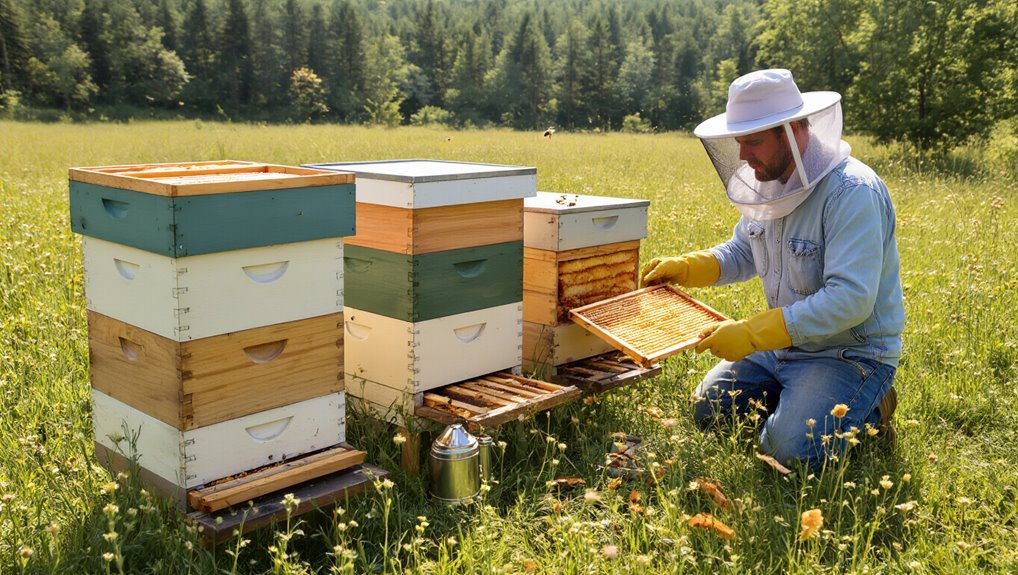
Toolbox-talk first: we’re going to sort through the main hive-box types so you’re not overwhelmed when you pick your first setup. We usually compare Langstroth, Top Bar, Warre and Flow styles, noting how frame construction affects inspection and honey work. Langstroth uses removable frames and modular boxes—deep brood boxes vs medium or shallow honey supers—so comb dimensions and spacing are standardized for easy management. Top Bar is horizontal and encourages natural comb building on bars, simple and beginner-friendly. Warre is vertical, small boxes, aims to mimic wild bees; it feels more eco-minded. Flow adds honey-extraction tech so you don’t disturb bees, though it costs more. We think about tradeoffs, maybe prioritize simplicity or convenience, depending on goals. We’re learning as we go, honestly, too.
Matching Box Size to Colony Size and Growth Plans
How do we pick the right box size without over- or under-building for a colony that’s still finding its feet? We start small for small colonies — a single story can be fine — and scale up as growth milestones appear. Our space strategy balances brood and honey needs: deeps for brood, mediums or shallows for supers, or all-medium stacks if we prefer lighter lifting. For winter in New England we plan two brood boxes. We’re aware scalability matters: two deeps plus mediums can equal three mediums. I think that’s practical. Maybe we’re cautious, but that’s okay. Tables help clarify:
| Setup | Strength | Notes |
|---|---|---|
| Single-story | Good for small | Simple |
| Two deeps | Winter hardy | Heavy |
We adjust as colony changes, learn constantly.
Materials, Durability, and Construction Choices
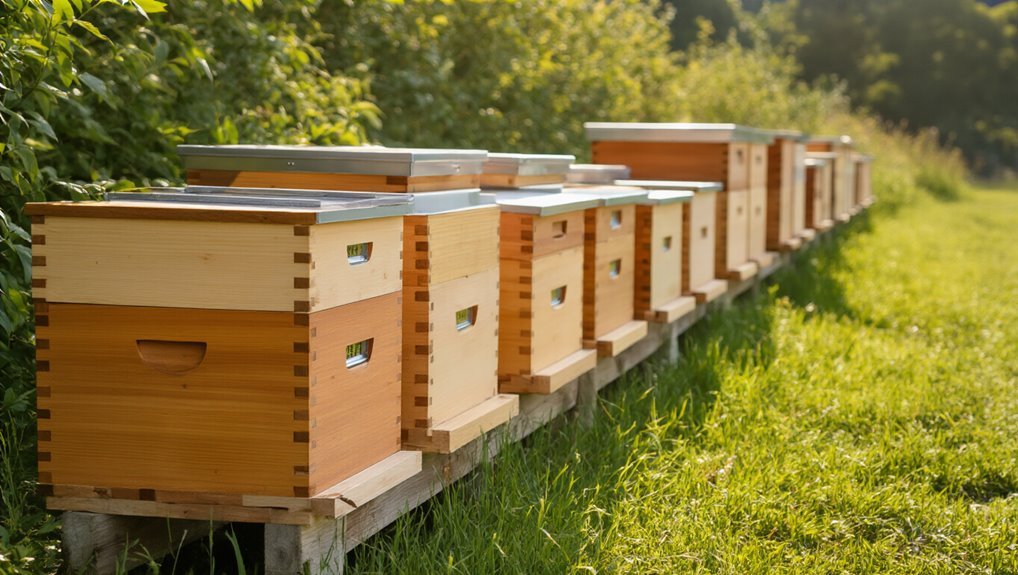
We’ve talked about sizing and how many boxes to stack, and now we’ll look at what those boxes should be made of. We like wood for tradition and insulation, pine is affordable, cedar resists pests, cypress lasts longer, so it’s a balancing act between longevity and weight. But wood needs care; wood treatment or paint is essential to prevent moisture and rot, and untreated timber will fail in humid places. Plastic feels modern: easy to clean, resists pests and disease, but it gives less warmth and has a different plastic lifespan and higher upfront cost. In my experience, choice depends on how much maintenance we’ll do, the environment, and frankly, personal taste. Maybe that’s obvious, but it matters. Weigh tradeoffs, and choose wisely, together.
Climate, Ventilation, and Seasonal Considerations
Climate matters more than most new keepers expect — it’s the difference between a thriving colony and one that struggles every year. We choose hive boxes with insulation in mind because wood holds heat; plastic often doesn’t in cold areas. We also watch ventilation cycles closely, adjusting entrances or vents so airflow removes winter moisture without chilling the cluster. Proper rain resistance — a waterproof finish or cover — keeps combs dry. In extreme spots we add moisture traps or shade covers; they help stabilize the internal environment. Seasonally we favor insulation for winter and moisture management in humid summers. We think it’s simple: get the balance right, and colonies do better. Maybe it’s obvious, but we really mean it.
Accessibility, Weight Management, and Maintenance
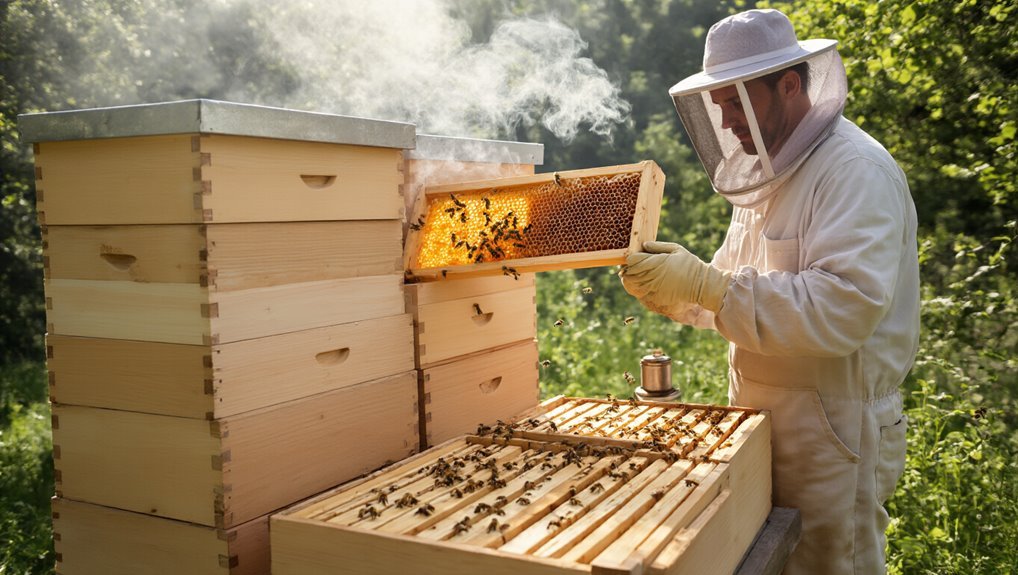
After thinking about insulation and ventilation, we also have to face the physical side of beekeeping — lifting, moving, and keeping things tidy. Deep brood boxes can hit 60–70 pounds full, mediums about 40–50, and shallows nearer 30–35, so we plan our work around weight distribution and smart timings. We prefer all-medium for easier lifts, though it means more frames to check — about 30 brood frames versus 20 in deep setups. Langstroth hives help: removable frames make inspections and honey extraction simpler, and modular parts speed maintenance. We like ergonomic lifts and using two people for heavy boxes. We think shallows improve accessibility, but they’re no brood boxes. We’re not entirely sure, but that’s been our experience, give or take, really honestly too
Frequently Asked Questions
How Do I Choose the Right Beehive Box?
We pick a beehive box by matching colony size and management goals—wait, don’t rush: prioritize box dimensions and wood type for climate and handling, balance brood chamber depth, weight, and future expansion to suit us.
What Is the 7 10 Rule in Beekeeping?
The 7 to 10 rule means we’re inspecting colonies every 7 to 10 days, monitoring brood, using brood calculations and timing swarms, catching queen or disease issues early and shortening intervals if hives are stressed.
What Is the 3 3 3 Rule for Bees?
Like a heartbeat, we’ll tell you the 3-3-3 rule is a guideline: roughly three frames brood, three frames honey, three frames pollen to stabilize colonies, reflecting foraging patterns and queen pheromones, though meanings often vary
What Is the Number One Killer of Honey Bees?
Varroa mites are the number one killer of honey bees; we’re aware pesticide exposure also weakens colonies, so we recommend regular monitoring and integrated controls to protect your hives from mites and chemical stressors too.