Most backyard honey rarely reaches the consumer raw — it’s usually warmed, filtered, or blended before it even leaves the hive. We’ll guide you through choosing hives, picking bees, and timing harvests so your honey keeps flavor and quality. I think beekeeping’s like learning an instrument; you need rhythm and patience. Maybe it sounds intimidating, and — ok, it is at first — but we’ll make it manageable, step by step.
Some of the links in this article may be affiliate links. If you make a purchase through these links, we may earn a small commission at no extra cost to you. Thank you.
Getting Started: Choosing Your First Hive, Bees, and Location

How should we even begin choosing our first hive and where to put it? We’d probably start with a standard Langstroth, or its ten-frame cousin, since frames and spare parts are easy to find and it’s familiar to most beekeepers. For bees, consider a packaged bee, a nuc, or adopting a resident colony — queen selection matters, so we’ll want a healthy, mated queen with workers around her. Pick a sunny spot with some shelter from strong winds and good nearby forage; think of it like choosing a home near groceries. We think aesthetics matter too — hive aesthetics can help blends into a garden, but function beats looks. Maybe we’re worried, maybe not, but we’ll learn as we go. We’ll adapt together, honestly.
Essential Equipment, Safety Gear, and Apiary Setup
The basics we’ll need aren’t complicated, but they’re important: a Langstroth or ten-frame hive (or a New Idea if we’re feeling adventurous), frames and foundation, and the usual hive tools. We’ll add veil, suit or jacket, gloves and smoke; safety gear’s not optional. Apiary placement matters — sun, flight paths, wind protection, level stands to keep pests and moisture away. We like to plan space for accessing multiple hives; it makes inspections smoother. I think hive aesthetics can be tasteful, but function first. And yes, beekeeper fashion matters to some of us — a neat suit helps. Below’s a quick checklist table:
| Item | Purpose | Notes |
|---|---|---|
| Hive | Shelter/resource | Langstroth/New Idea |
| Protective Gear | Safety | Veil, suit, gloves |
| Tools | Handling | Hive tool, brush |
| Setup | Placement | Stands, spacing |
Bee Biology, Colony Behavior, and Seasonal Management
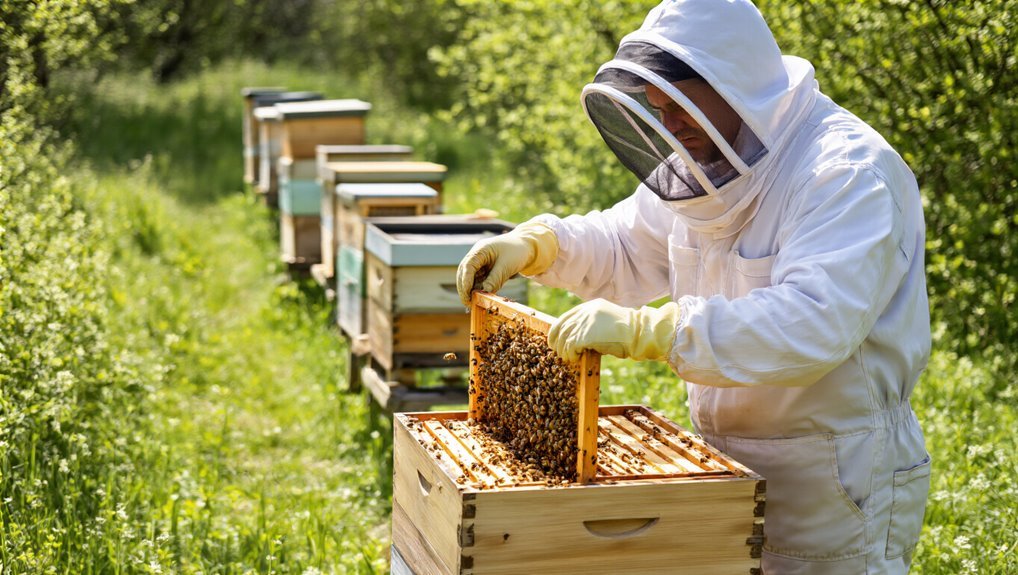
Why do a bee colony and a small town feel so similar? We watch distinct castes—workers, drones, queen—play roles like townsfolk. Eggs to larva to pupa to adult; it’s orderly, though messy sometimes—well, messy in a bee way. Division of labor and pheromone communication, especially queen pheromones, keep things coordinated. Foragers bring nectar, pollen, water and propolis from defined ranges to feed the population. Drone behavior and occasional swarming, influenced by colony health and swarming dynamics, guide our queen-rearing choices. Seasonal management matters: winter clustering, spring build-up, summer expansion, monsoon sheltering, and post-monsoon recovery each need different handling. I think it’s fascinating; maybe we’re caretakers more than managers, and that feels right—no, it feels necessary. We learn, adapt, and respect their seasonal rhythms.
Honey Production: Nectar Sources, Harvesting, and Processing
Gathering nectar and pollen is where honey production really begins, and we’ve learned to watch the landscape like a hungry neighbor watching dinner simmer—timed wrong, and you miss the whole meal.
| Spring | Wildflowers |
|---|---|
| Summer | Clover |
| Late | Heather |
| Autumn | Sap |
| Year-round | Apiary |
We follow seasonal honey flows tied to local flora; diversity shapes aroma, color and pollen. Harvesting means removing capped frames at the right moment, careful to limit brood disruption — we use proper extractors. Processing includes extraction, filtration and drying to hit moisture targets and avoid fermentation; it affects honey crystallization and final look. Wax production runs in parallel, so frames are valuable. We test moisture, grade by viscosity and color, then package. I think it’s straightforward, well, mostly; maybe we fuss too much, but practice fixes that.
Pest, Disease, and Varroa Management for Beginners
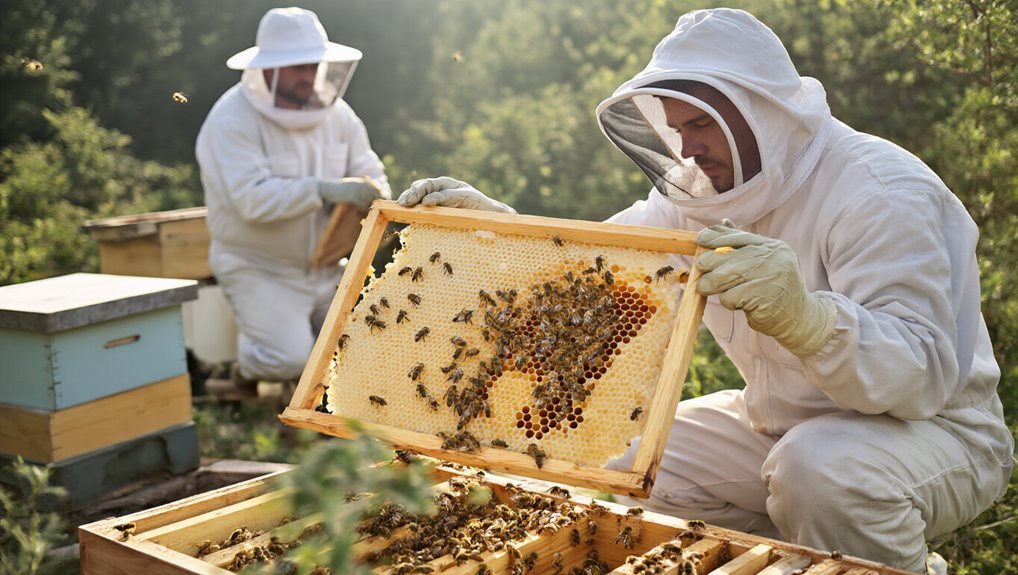
How do we tell when a hive’s doing okay or when it’s quietly falling apart from mites? We watch behavior, brood patterns, and adult bee numbers, and we do regular mite monitoring—sticky boards, sugar shakes—so we’re not guessing. In my experience, early detection matters; it’s like catching a leak before the roof caves in. We combine chemical and non-chemical tactics, rotate treatments to avoid resistance, and match interventions to colony life stage; nucs need different care than established hives. Treatment timing is essential: apply treatments when they’ll affect mites but spare brood where possible. We’re learning, we’re cautious, and maybe we’re a bit anxious at first, but consistent, colony-specific plans keep colonies productive and disease-free. Oops, that’s oddly poetic—rephrase—it’s practical, really, and effective now.
Marketing, Legal Considerations, and Starting a Small Apiary Business
If we’re serious about turning bees into a business, we need to treat marketing, legal stuff, and basic operations like they’re parts of one engine — all have to run together or the whole thing stalls. We map offerings — honey, beeswax, queens, pollination services — into clear milestones, pricing, and branding. We’ll lean on Quarry Books’ practical approach; we think, no—it’s Kim Flottum’s guidance is solid for a market-focused launch. We’ll check licensing requirements and local branding regulations early, because surprises kill momentum. Start small, test farmers’ markets, get feedback, iterate. It’s like learning to ride: fall once, get back up. Maybe we’ll misjudge demand — that’s fine, we adapt, pivot, and scale when results are measurable. We’ll track costs, profit, and trends.
Frequently Asked Questions
How Do I Turn Surplus Honey Into Mead at Home?
We’ll turn your surplus honey into mead by diluting honey with water, adjusting acidity and nutrients, then pitching a yeast; Honey fermentation requires monitoring and Yeast selection to control flavor, temperature, and fermentation time carefully.
Can Bee Venom Therapy (Apitherapy) Be Practiced Safely?
A hypothetical arthritis patient treated under medical supervision improved; yes, we say apitherapy can be practiced safely if we follow safety considerations and regulatory guidelines, monitor you carefully, screen for allergies, and document informed consent.
How Can I Upcycle Old Hive Wood Into Furniture or Crafts?
We’ll help you upcycle old hive wood into tables, shelves, or panels by treating it as reclaimed lumber: strip wax, sanitize, stabilize cracks, then choose finishing techniques like food-safe oil, beeswax polish, or varnish safely.
What Are Best Practices for Professional Bee Photography?
We’re focused on precise Lighting angles, crisp Subject framing, patient timing, macro lenses, diffuse light, low ISO, tripod safety, distance and gentle handling — ironically behaving as if bees posed for you, while respecting their colony.
How Can Drones Be Used to Monitor Hive Health Remotely?
We use drones for regular hive inspections, combining drone telemetry and remote sensing to track temperature, vibration, and forager activity. We’ll flag anomalies, share data with you, and guide interventions before issues escalate rapidly, too.