Like a cozy furnace in the snow, the winter cluster keeps the queen warm and our worries awake. We’ll cover insulation, ventilation, feeding, and mite checks in plain terms, and I think the basics really matter. Maybe we’re not entirely sure about every trick, but in my experience simple routines save colonies. We’ll—well, we will explain what to watch for to keep them through March—
Some of the links in this article may be affiliate links. If you make a purchase through these links, we may earn a small commission at no extra cost to you. Thank you.
What Happens to Honey Bees in Winter
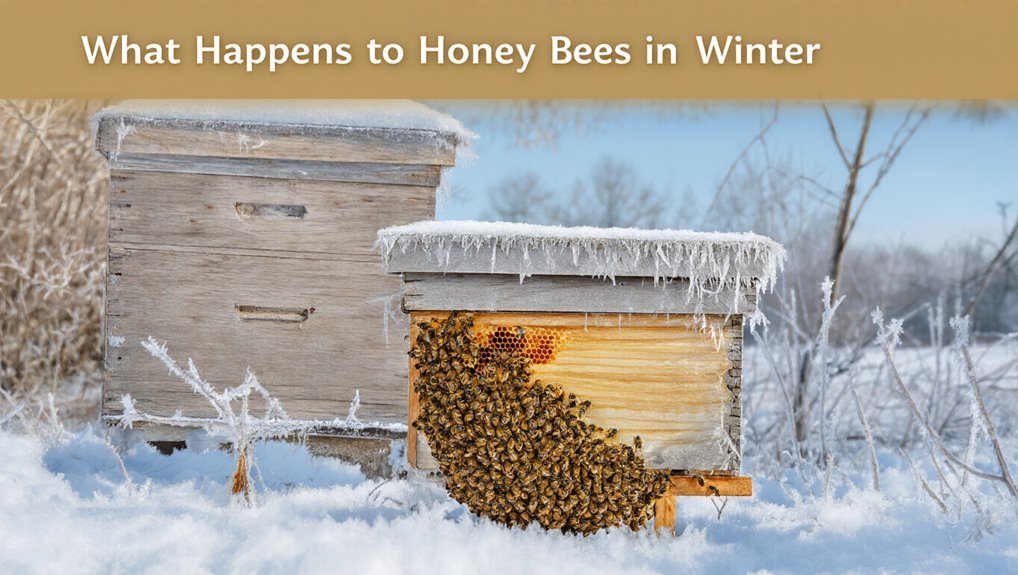
How do honey bees actually survive the cold? We watch them cluster tightly around the queen, a living blanket, and we’re fascinated by the cluster dynamics that let them conserve energy. They don’t hibernate; instead they vibrate flight muscles to produce warmth — heat generation that keeps the core near 90–100 °F. The outer mantel is dense; the inner core is looser and shifts as temperatures change. Bees cut activity and stop foraging, relying on stored honey. On warmer winter days they may take short cleansing flights. I think it’s remarkable. Well, maybe I romanticize it a bit, but seeing that cooperative rhythm feels like a single organism. I’m not entirely sure, but it’s nature’s efficient design. We learn from them, don’t we, and adapt.
Overwintering Basics for New Beekeepers
Because winter’s the time we either lose a colony or prove we planned well, we want to get the basics right now rather than panic in January. We check stores, mites and ventilation early; we understand bees cluster and keep the core 90–100°F by vibrating muscles — winter physiology at work. Plan roughly 90 pounds of honey per colony. Check Varroa in late fall; aim for under 1 mite per 100 bees. Reduce entrances and add mouse guards. Do brief inspections to monitor food and moisture. I think queen biology matters. Maybe we’re cautious, maybe we overprepare, but that’s fine. Table helps quick checks.
| Item | Target | Action |
|---|---|---|
| Honey | ~90 lb | Add stores |
| Varroa | <1/100 | Treat if needed |
| Entrance | Reduced | Guard |
We’re learning together and sharing.
Preparing Hives: Insulation, Ventilation, and Placement
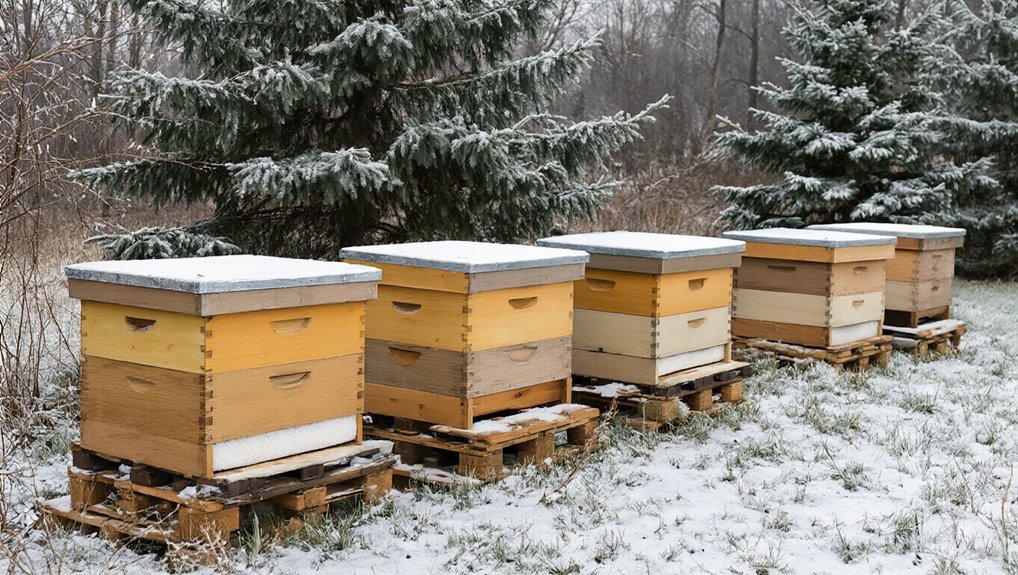
We’ve checked stores and mites, so next we’ll sort out the physical setup — insulation, airflow and where the hives sit on the landscape. We add extra insulation in extreme cold, using foam insulation boards or roofing felt, but we watch moisture closely; too much damp will ruin a colony. Don’t seal hives completely — keep a bottom and top intake for cross-ventilation to cut condensation. We like windbreak design to shield against gusts and secure covers; a winter hive cover helps, but lids must stay fast. Move or elevate boxes if flooding’s likely. Install mouse guards and reduce entrances to deter pests and drafts while preserving bottom-to-top airflow. I think this balanced approach really helps colonies survive. Well, maybe it’s not perfect, but it’s practical.
Feeding Strategies and Managing Food Stores
Keeping colonies fed is part science and part seat-of-the-pants—especially when winter’s breathing down our necks. We aim for roughly 90 pounds of honey per colony — about a full deep or two medium supers — because continuous heat eats stores. Sugar syrup can be offered until temps drop below 50°F; we use a 2:1 mix in a mason jar over the inner-cover hole with a hive body on top, it’s simple and effective. If honey’s low, we turn to dry foods or fondant feeding, candy boards or pollen boosts later on. Place food so frames around the cluster are accessible — both sides and above — and watch moisture. Condensation will kill more bees than cold, honestly. We’re careful, but maybe we miss things.
Varroa, Disease Prevention, and Winter Treatments

If we want colonies to make it through winter, we can’t treat Varroa like an afterthought. We monitor throughout the season, aiming for fewer than one mite per 100 bees in late fall — that’s our Mite thresholds target, simple as that. In my experience, fall treatments really matter; they keep viral loads low and prevent spring collapse. Use winter-appropriate options: Oxalic acid vaporization when colonies are broodless is a go-to, but follow label directions and temperature limits. Don’t rely on Formic Pro in cold weather — it evaporates wrong. We consult the Honey Bee Health Coalition tool, and we plan treatments. Well, maybe it’s obsessive, but a strong Varroa program saves hives, honestly it does. I’m not entirely sure, but I think we’re close.
Winter Monitoring, Troubleshooting, and Spring Transition
Although winter can feel like a waiting game, we try to stay actively engaged with our colonies through a simple routine of weekly checks and note-taking so nothing sneaks up on us. We keep data logging brief; a notebook or app helps us track food, moisture, pests, and cluster location without opening hives too often.
| Check | Purpose | Action |
|---|---|---|
| Food | Confirm stores | Feed if low |
| Moisture | Prevent mold | Ventilate |
| Pests | Spot Varroa | Treat timely |
| Cluster | Locate bees | Avoid opening |
On mild days we do quick inspections — verify stores, check for moisture, signs of Varroa, queen issues. We act quickly when colonies are weak. It’s hard, I think, but we document and learn. Monitoring’s like radar; it steers—no, guides—our spring shift and equipment choices.
Frequently Asked Questions
What Do I Do With My Bees in the Winter?
You might think it’s intimidating, but we keep bees safe by ensuring stores, managing ventilation, and monitoring mites. We’ll use Wintering techniques and Insulation strategies, reduce entrances, check food, and have a written plan ready.
What Is the 3 3 3 Rule for Bees?
The 3-3-3 rule isn’t defined here; we suggest focusing on queen behavior, brood pattern and food stores instead. If you mean another source’s 3-3-3, tell us and we’ll map hive metrics to that clear framework.
What Is the 7 10 Bee Rule?
We don’t have a defined ‘7 10 bee rule’ here, so we can’t state it; please share the original source or bulletin. Once provided, we’ll explain how it relates to hive dynamics and brood timing
How to Keep Bees From Dying in the Winter?
Like tucking children into bed, we’ll keep your bees alive by ensuring strong populations, treating mites, using insulation methods and ventilation, providing supplemental feeding before cold, reducing space, shielding hives, and choosing sunny, dry sites.