We’ll walk you through where bees spawn and why certain biomes matter, and we’re not just guessing — I think the patterns are pretty consistent. Bees show up in Meadows and Plains, sometimes in Flower Forests and Sunflower Plains; it’s like finding a needle in a haystack, but with flowers. Maybe you’ll spot nests on oak or birch trunks—no, on the trunk sides, sorry—I’m not entirely sure, but stick with us to see how to use that.
Some of the links in this article may be affiliate links. If you make a purchase through these links, we may earn a small commission at no extra cost to you. Thank you.
Natural Spawn Locations and Biome Conditions
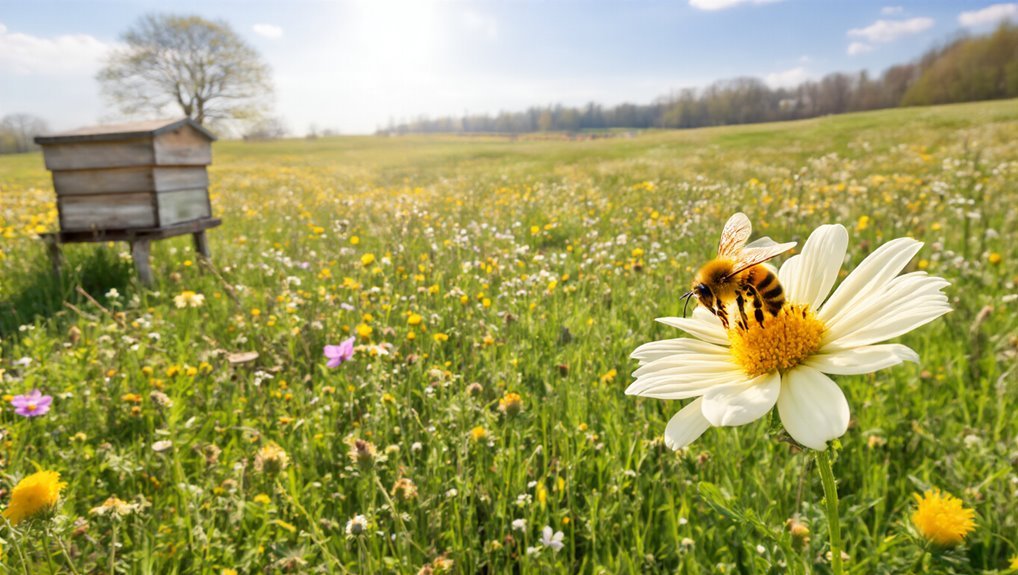
When we go hunting for bees, the easiest places to check are Meadows — they’re basically the hotspot — but don’t ignore Plains, Sunflower Plains, Flower Forests, Forests, Birch Forests, and even Old Growth Birch Forests; they all spawn bees, just with different frequencies. We tend to focus on meadow prevalence because it helps searching, but Biome diversity matters too — bees show up in settings. In our experience they like trees near flowers, often nesting right on trunks or close by, and a natural nest usually holds three bees. It’s almost like a neighborhood. Well, I mean, it’s small. We’re not saying it’s guaranteed everywhere, maybe you’ll wander a while, but keep an eye on trees and blossoms and you’ll spot them sooner.
Nest Generation Mechanics and Chance Rates
Although the odds are tiny, we still like to think of each tree as a little lottery ticket waiting to be scratched — and honestly, that makes hunting feel more exciting.
| Biome | Edition | Chance |
|---|---|---|
| Oak/Birch | Java | 0.2% |
| Oak/Birch | Bedrock | 0.035% |
| Sapling (near flower) | Any | 5% |
We’ll explain nest timing and tree probability in plain terms. Nests spawn naturally in oak or birch within Plains, Meadows, Flower Forests and similar biomes. Java gives 0.2% per tree; Bedrock only 0.035% — so yeah, it’s rare. Naturally spawned nests hold three bees. Meadows and Plains are better bets. Sapling growth is separate: if a sapling grows near a flower there’s a 5% chance it creates a nest. Maybe that sounds low; it is. I think it’s still useful.
How to Create or Encourage Bee Nests
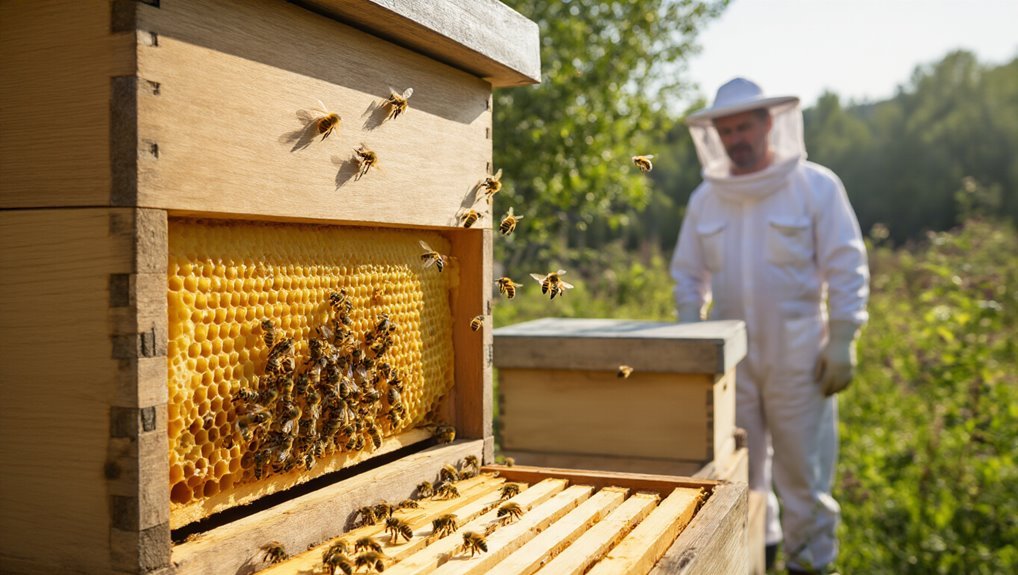
Since we want bees around our base, we’re usually better off making nests than waiting for the lottery of natural spawns, and there are a few simple tricks to stack the odds in our favor. Plant sapling within two blocks of a flower—timing matters; sapling timing can be important—because there’s about a 5% chance it’ll grow into a tree with a bee nest. Use growth accelerants like bonemeal to speed that process; I think faster growth its, I mean, it’s nudges the chance upward, though I’m not entirely sure how much. Do it in biomes that naturally get nests — Meadows, Flower Forests, Plains and similar — and patient. A spawned nest usually holds three bees, which gives us nice starting point for apiary.
Moving, Breeding, and Managing Colonies
We’ve talked about making nests, so now let’s talk about moving, breeding and generally keeping our little pollinators happy — it’s a different skill set but just as satisfying. We use leads for control, and careful lead placement matters when positioning bees near flowers; it’s like herding kittens, delicate. For moving occupied nests prefer Silk Touch—Silk Touch lets us relocate hives without angering the bees. Night relocation or rainy moves reduce disturbance; a campfire under the hive (and carpet on top in Java) can calm them when harvesting. Hives hold up to three bees; breeding needs two bees fed flowers to make a baby, with nearby flowers speeding growth. Don’t disturb nests, watch stings — they die after — and keep Silk Touch backups.
Honey Farming Tips and Hive Protection

How do we keep honey flowing without turning the place into a buzzing hazard? We monitor honey levels; when it hits five and honey is dripping, we harvest—honey bottling or honeycombs, whatever fits our setup. For calmer bees, we place a campfire under the hive with a carpet over the fire (Java), it’s campfire safety and it actually quiets them. We move hives away from crops for better pollination patterns, using leads or Silk Touch to avoid angering bees. Protecting hives from water, lava, fire, uncovered campfires, and cactus is obvious but essential. I think automated farms work best if we can relocate occupied hives gently; maybe it’s finicky, but it pays off. We’re careful, we’re patient, and we learn as we go, always.
Frequently Asked Questions
Where Do Bees Spawn the Most?
We’d thought seasonal nectar alone made meadows richest, but investigating shows we find bees spawn most in Meadows and Plains; those geographic hotspots offer abundant seasonal nectar, so we recommend searching plains and sunflower plains.
What Is the 3 3 3 Rule for Bees?
The 3-3-3 rule means hives typically hold up to three bees, spawn in triplets, and maintain small broods; we’ll explain how queen behavior and hive nutrition shape that balance, so you can better manage colonies.
What Is the 7/10 Rule in Beekeeping?
There’s no widely recognized 7/10 rule in beekeeping; imagine a new beekeeper watching brood disappear and feeling helpless; we’ll note rule interpretation varies, and application challenges—for example a misapplied timing worsens mite control—now warns us.
Where Do Bees Usually Spawn in Minecraft?
They usually spawn in Flower biomes and near Nesting blocks like bee nests; we’ll show you meadows, plains, forests, and sunflower or birch forests, in packs of three beside tree nests for pollination as examples.