Like clouds that won’t rain, our colonies sometimes hint at change but hold back, and that can be frustrating—no, it is frustrating. We’ll walk through what to check: orientation flights, bearding vs leaving, space and ventilation, queen cues and brood patterns. I think some fixes are simpler than we expect, maybe just another super or a vent; but we’re not entirely sure, so let’s sort it out.
Some of the links in this article may be affiliate links. If you make a purchase through these links, we may earn a small commission at no extra cost to you. Thank you.
Recognizing Normal Behavior: Orientation Flights and Bearding
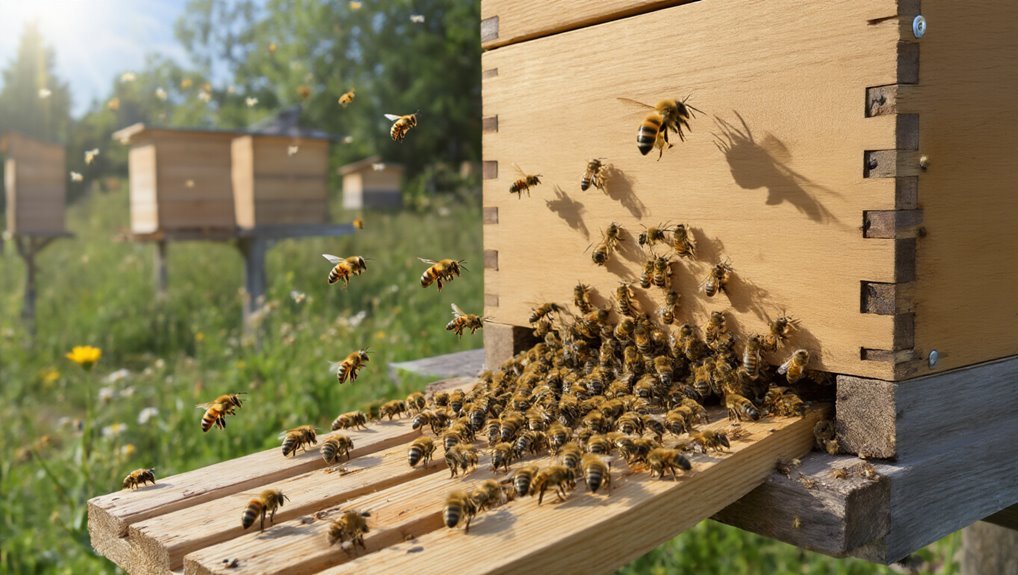
Usually we’re not seeing a swarm when bees are buzzing around the entrance — what we’re watching are orientation flights or bearding, and they’re both perfectly normal. We see virgin workers in warm spring and summer afternoons leave briefly, hover, and circle to learn the home site; many do it the same day, so it can look dramatic but it isn’t a swarm. Bearding is just thermoregulation — bees on the landing board or clustered outside to cool the hive, like people stepping out for air. Sounds can be misleading too; hive acoustics change during activity, but that doesn’t mean intent to leave. Orientation myths persist, though. We think, in my experience, staying calm helps — don’t assume worst, observe, and learn, and enjoy it.
Signs That a Swarm Is Unlikely in Your Apiary
We often check the obvious things first, because that’s where you’ll spot whether a swarm’s actually likely or not. We don’t see a large exodus or clustering on branches or the hive exterior, so that big dramatic departure isn’t happening. Inside, there aren’t swarm cells or queen cells being built; brood looks normal with a laying queen and steady egg patterns. Bees do short orientation flights and linger at the entrance briefly on warm days, not massing to leave. Sometimes bearding looks alarming, but it’s usually just heat regulation or daytime temperature—nothing to do with swarming. We think bee genetics and nectar timing matter, too; they shape behavior, and in our experience those factors often keep colonies really steady rather than on the move.
Inspecting Hive Space, Ventilation, and Moisture Issues
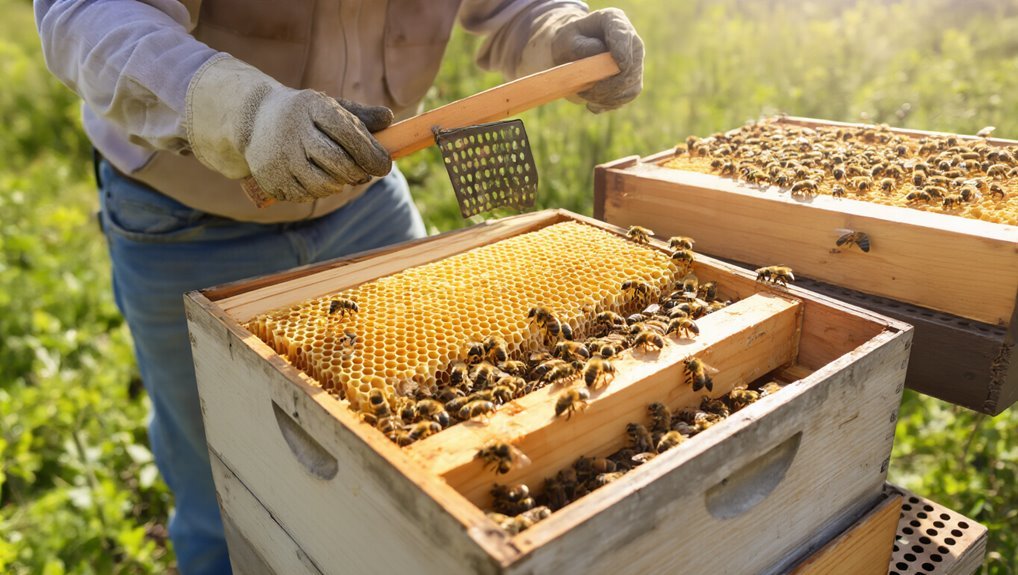
Although it’s tempting to look for dramatic signs, crowded combs and poor airflow are the first things we check when a colony seems restless. We’ll assess space — add supers if brood and honey are crammed — because crowding raises swarming pressure and messes with nectar dynamics. We also evaluate ventilation and hive moisture; poor airflow causes bearding and heat stress. Sometimes foragers bring pond water as evaporative cooling, telling us we need more vents. In my experience, bearding in the afternoon is thermoregulation, not a swarm. Maybe we’re wrong sometimes, but usually that’s it. Here’s what we do next:
- Measure space and occupancy.
- Improve ventilation and upper entrances.
- Add or rearrange supers.
- Monitor temperature and moisture.
Check regularly, ok.
Evaluating Queen Health, Pheromones, and Brood Patterns
How do we tell if the queen’s really holding the colony together? We look for consistent pheromone cues and steady brood patterns; a healthy laying queen keeps the hive calm and stops unnecessary queen rearing. If eggs are uniform and brood looks compact, that’s good. Scattered eggs or queen cells? That’s a red flag. If brood is absent or irregular, we verify queen presence or mating success—maybe she’s failing, maybe she was virgin and not laying yet. In my experience, queen health shows up like a heartbeat you can read in frames. We often requeen when supercedure signs appear, using cages or combo introductions so pheromones blend and bees accept her. It’s not foolproof, but it usually works, I think, and sometimes surprisingly quickly.
Environmental and Seasonal Factors Affecting Swarming
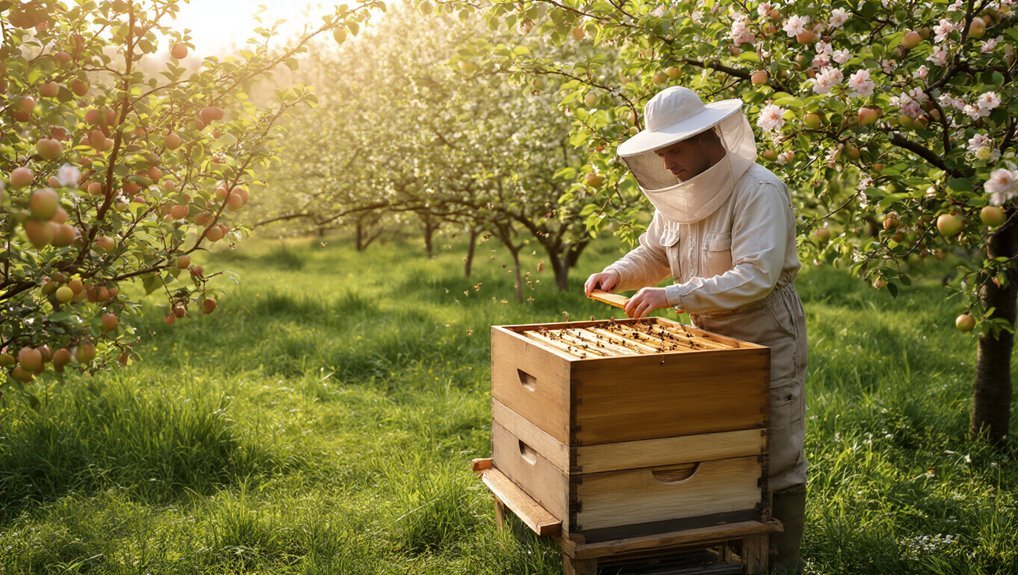
When does swarming really kick into gear? We see it from spring through fall, not on a calendar date, and it’s driven by warmer weather, brood rearing and nectar flow. In our experience, very hot days and high humidity add stress that raises swarming pressure. Wind patterns and seasonal rainfall change nectar availability and colony behavior; maybe slow flows still cause congestion. We’re thinking about the hive like a crowded theater. It’s messy, but understandable. We’re not entirely sure, but poor ventilation and crowding disrupt pheromones and cue preparations. Well, here are quick takeaways: We’ll watch patterns closely, honestly, together.
- Timing tied to favorable weather.
- Warmth boosts brood, prompting splits.
- Heat and humidity increase stress.
- Variable nectar flow (including delays).
Practical Corrections: Adding Space, Venting, and Drainage
Spring and summer swarming pressures come from crowding, brood buildup and sticky, humid days, so it makes sense that our first practical moves are simple: give the colony more room, improve airflow, and get the hive off any soggy ground. We add a box or super early to reduce crowding and let bees store brood, nectar and pollen; good box design matters because frames should be accessible and airy. We also expand brood and honey compartments before it’s tight. Ventilation is key—screens, angled entrances or top vents cut humidity and stress. Improve drainage at the stand and entrance; we’ve seen drainage benefits reduce damp problems. Monitor for queen cells and remove as needed, while keeping space and airflow consistent. I think it helps, really.
When to Requeen or Use Managed Splits
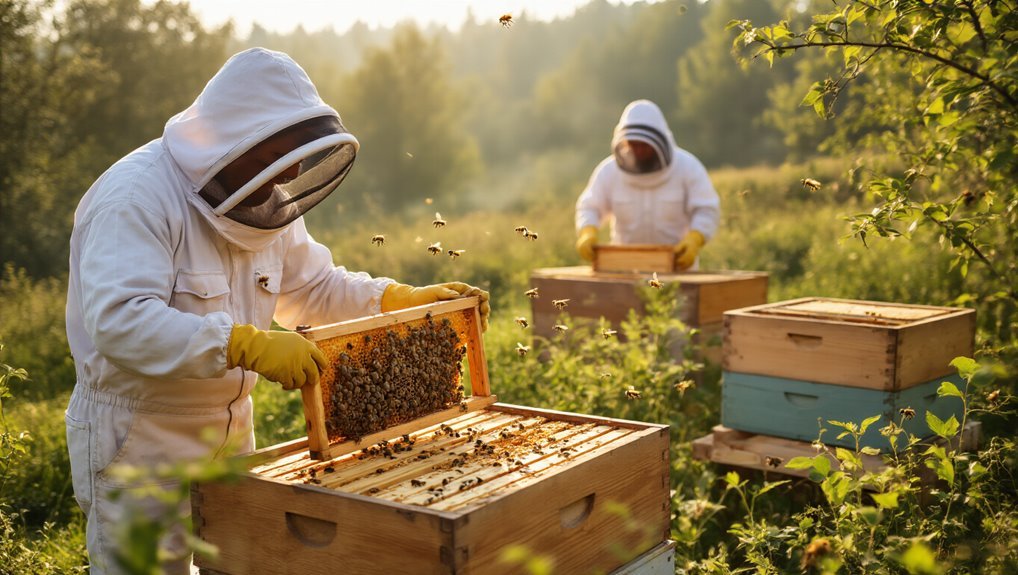
If a colony’s gone queenless or the queen’s clearly failing, we don’t wait around — we act, because a missing or poorly mated queen shows up fast in the hive: no eggs, gaps in capped brood, and a nervous brood pattern. When that happens we consider requeening or a managed split; it’s like rebooting a confused computer. We prefer locally reared queens and plan queen introduction using a cage or combo introduction so pheromones mellow first. Schedule depends on stores, brood status, and split timing — not guesswork. I think controlled requeening beats chaos. We’re careful — mistakes happen, but we learn.
- Confirm queenless window and brood gaps.
- Check stores and nurse strength.
- Use cage/combo for gradual release.
- Prefer local queen, then monitor acceptance.
Frequently Asked Questions
What Is the 3 3 3 Rule for Bees?
There’s no established ‘3-3-3’ rule for bees — how ironic — we suggest it means three days observation, three weeks hive timing, three months brood cycles; we’ll refine with any source you offer please share
What Can Trigger Swarming?
Swarming’s triggered by overcrowding, reduced queen pheromones, rising brood rearing, strong nectar flow, and changing weather cues that signal spring; we explain signs and options so you can recognize and mitigate swarming pressure effectively too.
What to Do With Bees in October?
Like gardeners preparing beds, we inspect and manage hives: perform hive maintenance, guarantee october foraging resources and stores, reduce congestion, install entrance reducers, and requeen or merge weak colonies so they’ll overwinter successfully, confidently together.
Why Is a Bee Just Sitting There?
It’s likely resting or orienting at the entrance; we note idle behavior as normal. We explain hive etiquette to you: scouts, orientation flights, thermoregulation and brief rests all produce momentary pauses, not cause for alarm.