We could find a beekeeper on every corner, or at least it feels that way, and that’s both fun and overwhelming. We’ll lean on local supply shops and the county extension for hands-on help, though online stores are handy for obscure parts. I think local nucs and gloves are worth the trip — like choosing the right knife for a kitchen — maybe, probably, we’ll explain why next, because mistakes cost bees.
Some of the links in this article may be affiliate links. If you make a purchase through these links, we may earn a small commission at no extra cost to you. Thank you.
Local Beekeeping Supply Stores and Cooperative Extensions
Where do we even start—right here in town, with a handful of St. Louis shops that actually know our bees and our seasons. We visit local storefronts that feel like neighborly toolsheds, and we rely on extension partnerships with Saint Louis Beekeepers and Missouri associations to keep advice grounded. We offer classes in-store, we sell gift certificates, and we keep hours that work around our lives so you can drop by. I think hands-on help is worth more than a catalog, but maybe that’s bias. It’s practical—call 314-894-8737, view the map, and come see. We’re learning together; sometimes we fumble, then we learn, or rather relearn, and that’s okay. You know, in my experience the staff actually care—no, seriously, they do help beginners too.
Online Retailers, Shipping Options, and Buy-Local Alternatives
How do we choose between the convenience of a click-and-ship catalog and the neighborly reassurance of a local counter? We weigh price, speed, and trust. Online retailers carry broad catalogs—hive tools, protective gear, even items for 14.99—and often offer free shipping on orders over 150, though some exclusions apply. Or we can buy local: St. Louis and Illinois customers see “Skip the Shipping – Buy Local!” and can pickup in-store (Tue–Sun; closed Monday). Call the St. Louis team at 314-894-8737 for questions. Consider:
- Fast delivery when we opt for online shipping options.
- Ability to touch gear in person locally.
- Potential savings on bulk orders.
- Immediate pickup and advice from staff.
- Some online items excluded from promotions.
We think it’s helpful, honestly, to mix both, really.
Choosing Bee Hive Components: Bodies, Frames, and Foundation
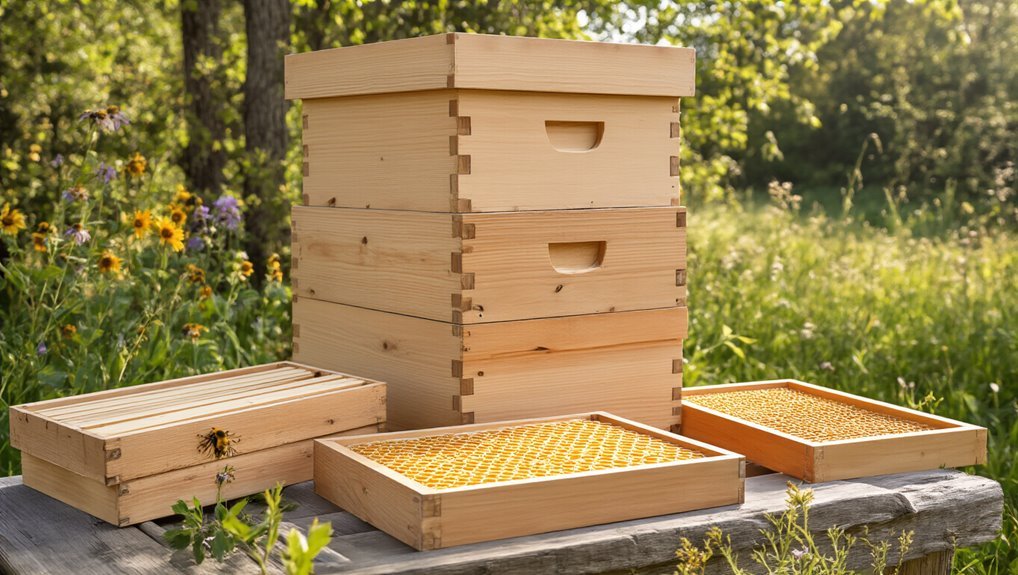
Choosing the right hive components means balancing what we already own, what we want to manage, and how much hands-on time we’re willing to spend. We usually pick 8-frame or 10-frame bodies to match existing equipment and desired brood space, and frame sizing matters — it’s, well, not just numbers, it changes workload. Use frames that fit your bodies and pair them with the right foundation; foundation selection affects comb construction and how easy management is. For beginners, first-year kits are lifesaver; they include compatible bodies, frames, foundation, and basic hardware. Don’t forget bottom boards and telescopic covers to protect colonies and regulate conditions. I think it’s like picking tools for a kitchen; choose what you’ll actually use. Maybe start small, grow as needed.
Protective Clothing, Extraction Equipment, and Honey Containers
Safety-gear and toolkits matter as much as the hive itself; we don’t want to skimp on protective clothing, extraction equipment, or the right honey containers because they’re the difference between a smooth harvest and a frustrating sticky mess. We look for fabric durability and clear sizing standards in jackets, veils; I think a good suit is like insurance. Extraction gear should be sturdy, easy to clean. Honey containers come in bulk: 8 oz honeycomb 575-case from $200, 12 oz bears 365-case from $168, 24 oz bears 185-case from $139, and 2 lb honeycomb 159-case from $122. Our checklist:
- Durable suits with tested fabric durability
- Veils meeting sizing standards
- Smoker and hive tool combos
- Manual and electric extractors
- Case quantities for jars and comb
Sourcing Bees: Nucs, Queens, and Package Bees
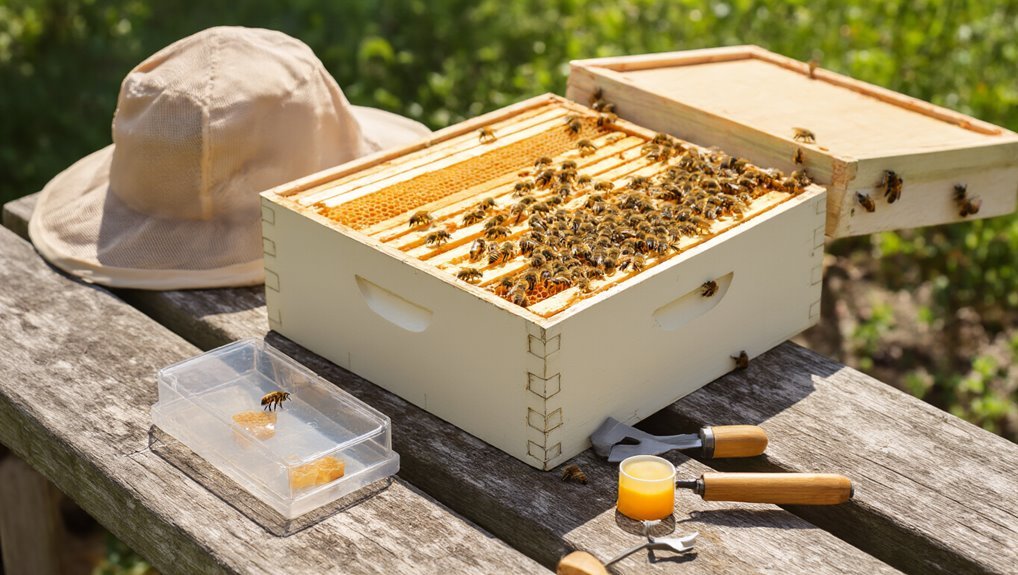
Why pick between nucs, queens, or package bees when what we really want is bees that’ll thrive here? We like to think of sourcing as matchmaking: nucs arrive ready-to-run with a laying queen, frames of brood, pollen, and honey, so you’re not starting from scratch. Meyer Bees supplies nucs, queens, and package bees matched to Missouri—Kansas City to St. Louis—so nuc genetics and queen selection matter. In my experience well-mated queens show calmer temperament and better productivity in our climate. Package bees come healthy and ready to forage. We’re picky, and you should be to. Maybe its obvious—no, it’s obvious, but getting local bees saves headaches later. We’ll help you choose wisely and provide trusted local support.
Frequently Asked Questions
What Is the 7 10 Rule in Beekeeping?
It’s literally the most useful rule: we’re inspecting hives every 7–10 days during peak brood-rearing to monitor queen laying, brood health and hive dynamics, guiding nectar mapping, feeding and super management so you avoid problems.
What Is the 3 3 3 Rule for Bees?
The 3-3-3 rule’s a flexible mnemonic telling you to limit disturbance: three puffs of smoke, three movements or frames, three minutes per area; we use hive math and queen selection principles when planning inspections too.
What Time of Year Should I Buy Bees?
We recommend buying bees in late winter to early spring (February–April) so colonies establish before nectar flows; we’ll plan queen selection ahead, watch seasonal prices, and advise you to order early from local suppliers nearby.
How Many Bees Do You Need for a Tax Write-Off?
There’s no fixed number of bees required for a tax write-off; Deduction limits, Audit considerations vary, so we’re advising you to consult a qualified tax professional who’ll assess eligibility, expenses, and documentation for your situation.